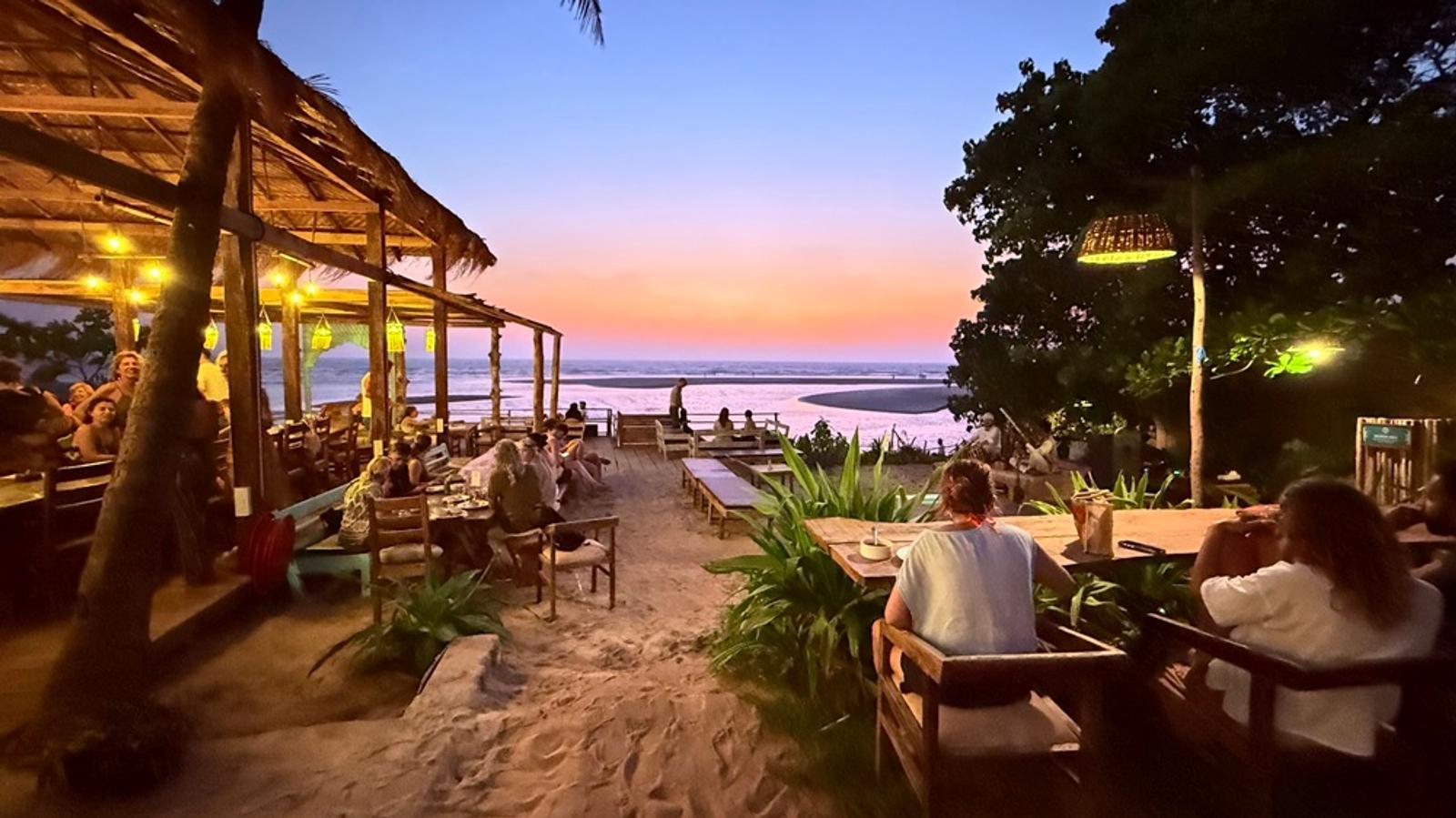

Choosing a retreat in Goa is harder than it should be. The marketing is uniformly beautiful. Every property has a yoga shala, a pool photograph, and a description that uses the word transformational. The practical differences - in the quality of teaching, the depth of Ayurvedic care, the structure of the programme, the quietness of the location - are rarely visible from a booking page.
This guide cuts through the visual homogeneity and helps you match the right kind of retreat to what you actually need. It covers the main retreat types available in Goa, the questions that reveal real quality, and how to make the decision based on your specific situation rather than the best Instagram account.
Direct Answer
To choose the right retreat in Goa, first identify your primary goal (rest, specific health outcome, yoga depth, teacher training, or group hosting), then match that goal to the correct retreat format (open retreat, wellness programme, teacher training, or hosted retreat). Nalanda Retreat on Mandrem Beach offers all four formats, with programmes from 3 to 14 nights starting from €361 per person.
Step 1: Identify What You Actually Need
The Four Real Reasons People Book a Retreat in Goa
Rest and reset. You are tired in a way that a holiday does not address. You need structure, quiet, and a supported environment. You are not looking for a specific clinical outcome - you need to stop. The right format: open retreat or short programme.
A specific health goal. You have a clear issue: chronic stress, sleep disruption, hormonal imbalance, digestive problems, weight and metabolic concerns. You want structured wellness approach, not just a relaxing week. The right format: targeted wellness programme.
Yoga or practice depth. You have a regular practice and want immersion in a tradition, a specific technique, or a concentrated period of daily practice with good teachers. The right format: yoga immersion retreat or teacher training.
Hosting your own retreat or group. You are a yoga teacher, wellness professional, or corporate organiser bringing a group and need a venue partner who handles logistics. The right format: hosted retreat or corporate wellness retreat.
Why Getting This Right Matters
A structured wellness programme booked by someone who needed rest and quiet will feel overscheduled and clinical. An open retreat booked by someone with a specific health goal will feel pleasant but insufficient. The format mismatch is a common reason people leave retreats feeling they did not get what they came for.
Step 2: Match Your Goal to the Right Format
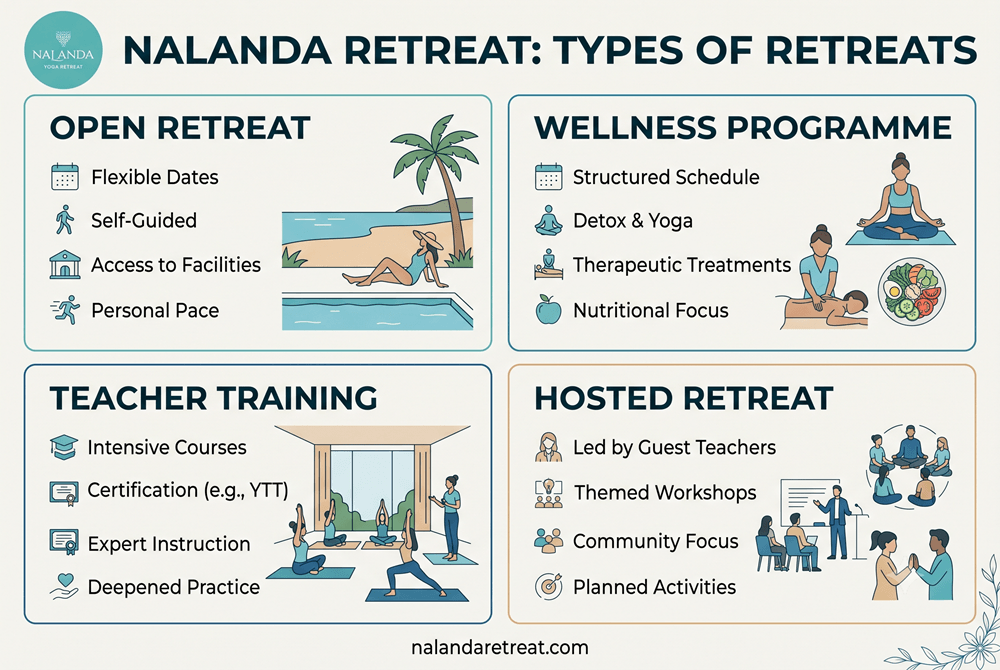
Open Retreats
Open retreats at Nalanda follow a daily structure - morning yoga, Ayurvedic meals, afternoon practice, unscheduled evenings - without a specific programme focus. They are the right choice for rest, practice maintenance, and immersive exposure to the Nalanda environment.
The Yoga Holiday is the most accessible open retreat format. The Yoga and Ayurveda Immersion and Transformative Hatha Yoga Retreat offer more practice depth for experienced students. The Let Goa retreat and Grounded in Presence retreat are hosted formats with specific teachers and themes.
Wellness Programmes
Nalanda runs ten structured wellness programmes from 3 to 14 nights. Each has a specific programme focus and a designed treatment sequence at Soma Cove. The entry point is the First Step Wellness Awakening (3 nights from €361), which introduces Ayurvedic care and gives you the foundation for a longer programme if needed.
For specific goals: stress and burnout (stress and burnout programme), sleep disruption (sleep disruption programme), digestive health (digestive health programme), weight and metabolic transformation (weight and metabolic transformation programme), cellular aging and longevity (cellular vitality and longevity programme), hormonal health (hormonal health programme), and deep Panchakarma purification (Panchakarma Deep Purification programme).
Teacher Training
Nalanda offers the 200-hour Yoga Teacher Training (the 200-hour Yoga Teacher Training), available with upcoming cohorts in November 2026 (the 200-hour Yoga Teacher Training-nov-2026) and January 2027 (the 200-hour Yoga Teacher Training-jan-2027), plus 50-hour specialisations in Yoga Nidra and Breathwork (Yoga Nidra and Breathwork specialisation), Ashtanga (Ashtanga specialisation), and Vinyasa and Adjustments (Vinyasa and Adjustments specialisation). Teacher training is a full-time commitment with a different daily structure from retreat programmes.
Hosted and Corporate Retreats
For teachers and facilitators hosting their own group, the hosted retreat model gives you the venue, the logistics team, and the infrastructure. You bring the programme and the participants. The corporate wellness retreat format is designed for team and leadership groups. Both can be tailored in format and duration.
Step 3: Evaluate the Quality of What You Are Booking
Questions That Reveal Real Difference
Who teaches? Nalanda's teachers (teachers page) are listed with full profiles. If a retreat website cannot tell you who is teaching or lists credentials vaguely, ask before booking.
What happens before you arrive? Nalanda sends a pre-arrival health questionnaire and preparation guidelines for all programme guests. A retreat that confirms your booking and asks no further questions is not running a programme.
What is the daily structure? A published schedule with specific times and content is evidence of a designed programme. A vague description of 'daily yoga and wellness activities' is not.
What is the guest review history? Nalanda holds a 4.7-star Google rating from over 20,000 guests. A sustained rating across a large sample is more reliable than a curated set of testimonials.
What does it include? Meals, accommodation, treatments, transfers, and departure guidance vary by programme. Nalanda's programme pages list inclusions specifically. Hidden extras at checkout are a reliable quality signal.
Step 4: Match the Location to Your Goal
Why Mandrem Beach Specifically
Goa's retreat quality varies significantly by location. Busy beach areas with nightlife, road noise, and high footfall require the guest to manage stimulation actively - this competes directly with the recovery goal. Mandrem Beach in North Goa has significantly less of this. The Mandrem destination guide covers the specific character of the location.
The quieter the environment, the less work the retreat has to do to create the conditions for recovery. Nalanda's beachfront location means the environment itself is part of the programme - the sound of the sea, the absence of traffic, the quality of the air. This is not incidental.
Which Season to Choose
October to March is the primary retreat season. October specifically offers excellent availability, post-monsoon environmental quality, and prices below peak season. The monsoon season (June to September) is classically ideal for Panchakarma. The monsoon retreat guide explains why.
Frequently asked questions
What is the best retreat in Goa for beginners?
The First Step Wellness Awakening (3 nights) is Nalanda's designed entry point for complete beginners. The Yoga Holiday is the right open retreat format for those new to retreat environments. Neither requires prior yoga or wellness experience.
How far in advance should I book a retreat in Goa?
For peak season (November to February), book two to three months ahead for programmes and the best room categories. For October and March, four to six weeks is typically sufficient. The monsoon season has more last-minute availability.
Can I combine a retreat with exploring Goa?
Yes. Most Nalanda programmes have unscheduled afternoon or evening time. Day trips to Arambol market, Old Goa, or Anjuna are manageable. However, the more you fill the unscheduled time with external stimulation, the less benefit the retreat environment delivers. This is worth knowing in advance.
Is it better to book a programme or an open retreat?
It depends on what you need. If you have a specific health goal, a programme. If you need rest and practice, an open retreat. a common mistake is booking an open retreat when a programme is what the situation actually calls for.
What retreats does Nalanda offer for specific health conditions?
Nalanda offers programmes for stress (stress and burnout programme), sleep (sleep disruption programme), digestion (digestive health programme), weight and metabolism (weight and metabolic transformation programme), hormonal health (hormonal health programme), longevity (cellular vitality and longevity programme), and deep Panchakarma (Panchakarma Deep Purification programme). For conditions not listed, the bespoke enquiry allows custom programme design.
How do I book a retreat at Nalanda?
Browse the retreats calendar at the retreats calendar and the programme pages at the programmes page. Submit an enquiry through the relevant programme page or contact the team at the team. For a personalised programme, use the bespoke programme enquiry.