Surfing and yoga have more in common than the fact that they both happen near water. Both require the same qualities: the ability to be present in an unpredictable environment, a physical practice that demands balance and breath awareness, and a kind of patient attention that modern life makes increasingly difficult.
Combining the two within a structured retreat creates something genuinely distinct from either separately. The yoga builds the physical and mental foundation that makes surfing more intuitive. The surfing gives the yoga practice a specific, energising application.
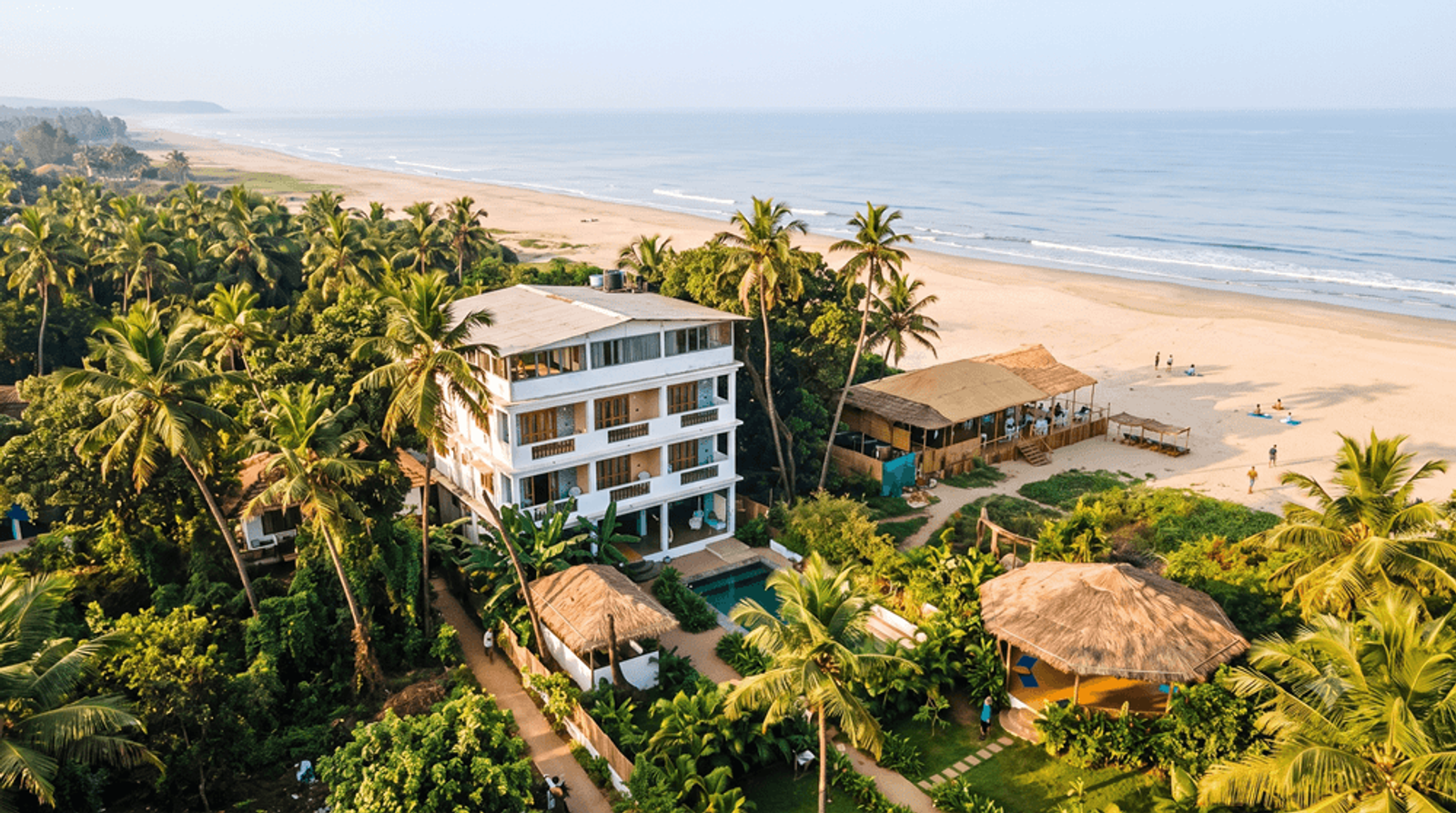
The Yoga and Surf Retreat at Nalanda Retreat on Mandrem Beach runs during the surf season (October to April) and brings together Nalanda's established yoga and wellness infrastructure with access to Goa's North Coast surf.
Direct Answer
Nalanda's Yoga and Surf Retreat combines daily structured yoga sessions with guided surf sessions on Goa's North Coast. No prior surf experience is required. The retreat runs during Goa's surf season (October to April). Yoga sessions focus on the mobility, balance, and breath work that directly supports surfing. Recovery support is available through Soma Cove. For current dates and availability, contact the Nalanda team.
Why Mandrem and North Goa for Surf and Yoga
The Surf
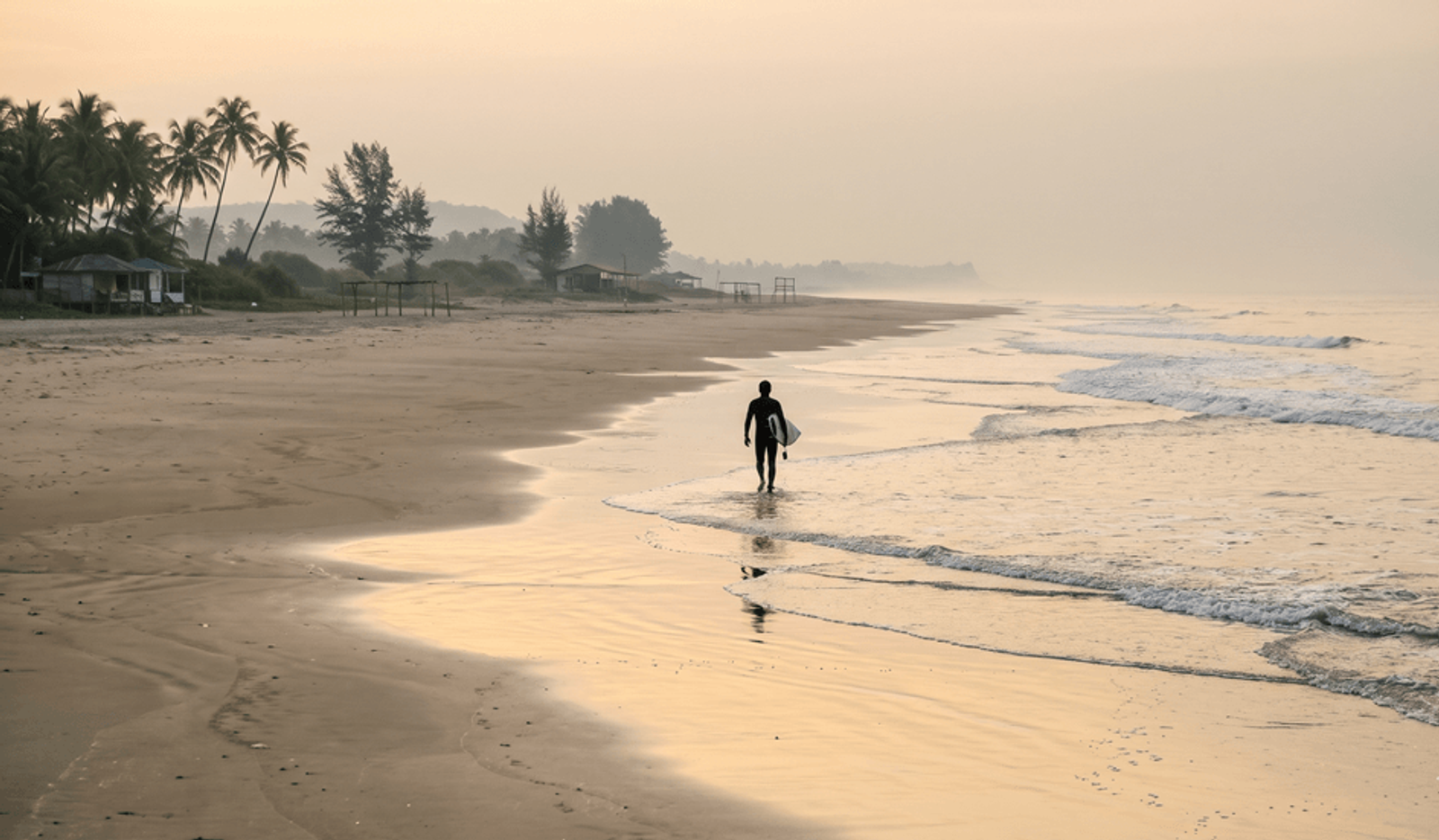
Goa's North Coast - from Ashvem through Mandrem and up to Arambol - offers the most consistent surf conditions in the state during the October to April season. The waves on this stretch are well-suited to beginners and intermediate surfers, with enough variety to challenge people as they develop. The beach-break character of the North Coast means waves are generally forgiving and accessible.
Mandrem Beach itself has surf conditions during the season, and the broader North Goa coast within easy reach includes Ashvem and Morjim, both of which are established surf spots. Surf instruction and board hire are available through local schools that the retreat coordinates with.
The Yoga
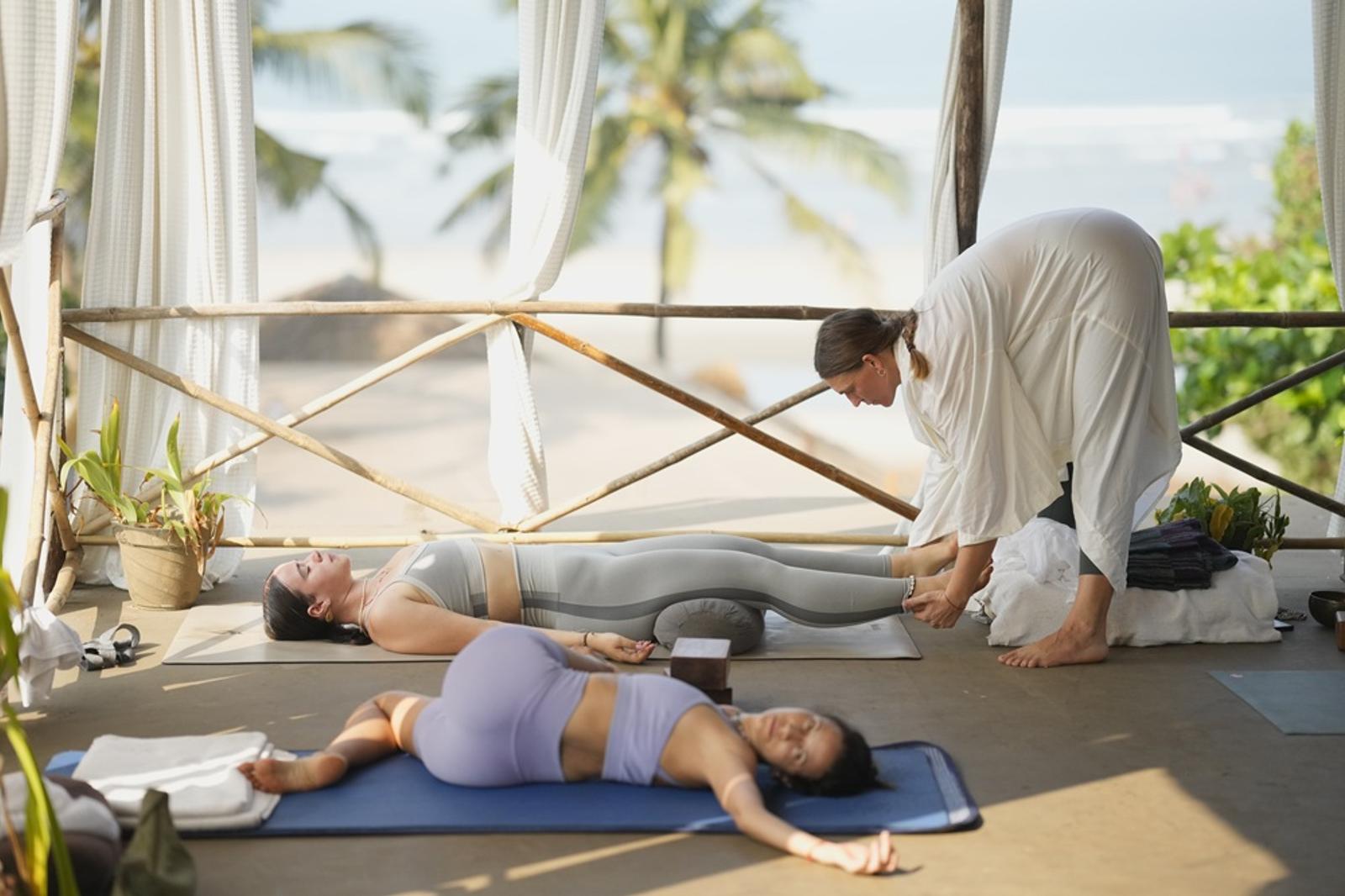
Nalanda Retreat has been running structured yoga programmes since its founding. The teaching team offers Hatha, Vinyasa, and Yin practice across open-air shalas on the property. For a surf-focused retreat, the yoga programme is oriented specifically toward the physical demands of surfing: hip mobility, thoracic rotation, shoulder opening, core engagement, and breath capacity.
Why They Work Together
The physical connection between yoga and surfing is direct. Paddling requires shoulder mobility and thoracic rotation. Popping up on the board requires core engagement and hip mobility. Reading and riding a wave requires exactly the kind of present-moment attention that a regular yoga practice develops.
The mental connection is equally clear. Surfing in unpredictable conditions requires the same quality of relaxed attention - alert but not anxious - that seated meditation and moving practice both develop. Surfers who practise yoga regularly tend to describe improved wave-reading and a calmer response to wipeouts.
What the Retreat Looks Like Day to Day
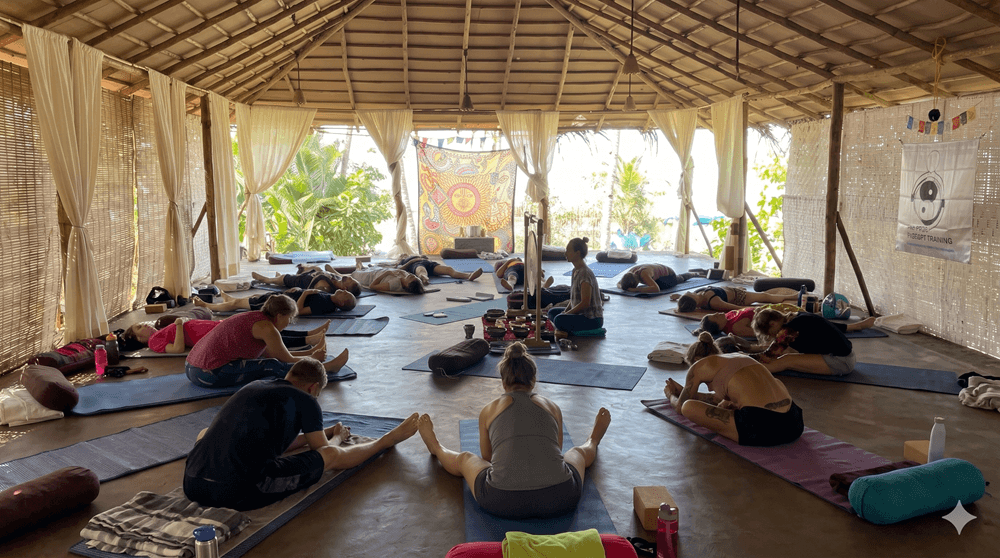
Morning: Yoga
The day begins with a 90-minute structured yoga session in Nalanda's open-air shala. For the surf retreat, the morning practice emphasises mobility and activation rather than deep relaxation - the body needs to be ready for the water. Pranayama and breath capacity work is incorporated with particular attention to breath-hold patterns relevant to surfing.
Late Morning: Surf Session
Surf sessions run with qualified instructors in small groups. For complete beginners, the first two to three sessions focus on board familiarity, paddling technique, and the pop-up on the beach before entering the water. For guests with prior experience, the sessions move more quickly to reading conditions and developing specific techniques.
Transport to and from the surf location is arranged by the retreat. Boards and wetsuits (if needed, though Goa's water is warm enough that most guests don't require one) are provided.
Afternoon: Recovery and Rest
Surfing is physically demanding in ways that catch many first-timers off guard. The afternoon is designed for recovery: a nourishing lunch at Chia Lounge, a genuine rest period, and optional access to Soma Cove for recovery-focused approaches.
The Soma Cove Recovery pillar is specifically designed for physical recovery support. For surf retreat guests, approaches most commonly used include Abhyanga (for muscle tension and joint mobility),
Late Afternoon: Yin or Restorative Yoga
A 60 to 75-minute Yin or restorative yoga session closes the active part of the day, targeting the areas most used in surfing - hips, shoulders, lower back, and ankles. This session does the recovery work that the active morning practice cannot.
Evening: Unscheduled
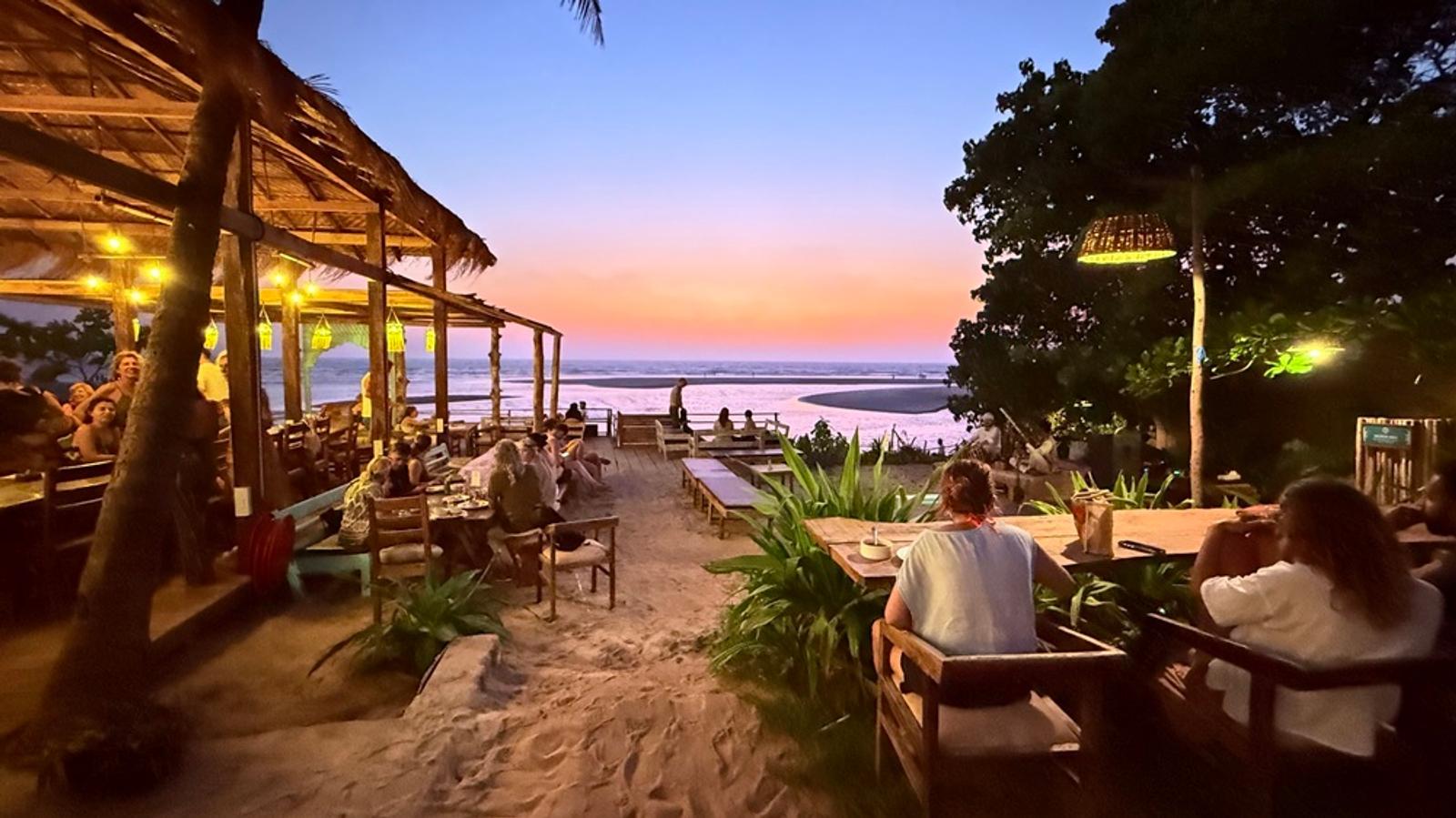
Dinner at Chia Lounge, then the evening is yours. Most surf retreat guests are asleep earlier than they expect to be. The physical output of a day that combines yoga and surfing tends to resolve the question of what to do with the evening.
Who the Retreat Is For
Complete beginners to surfing: Welcome. Most surf retreat guests at Nalanda have not surfed before. The instruction is structured for this. The yoga foundation actually gives beginners an advantage in how quickly they develop.
Intermediate surfers: The retreat is also well-suited to surfers with some experience who want a structured approach to improving specific skills alongside a yoga practice.
Yoga practitioners who want to try surfing: The transition from established yoga practice to surfing is often surprisingly natural. Many yoga practitioners find surfing more intuitive than they expected.
People who want active recovery alongside an active pursuit: The Soma Cove recovery component is a meaningful differentiator. This is not just a surf camp with yoga. The recovery infrastructure is there.
Practical Details
When to Come
The surf season in North Goa runs October to April. October and November offer the combination of surf season opening, lower prices, and the post-monsoon environment. February and March typically offer the most consistent surf conditions of the season.
What to Bring
- Swimwear and rash vests (rash guards are advisable for extended water time)
- Sunscreen SPF 50 - the combination of sun and water reflection means higher exposure than most people expect
- Yoga clothes for the sessions
- Light layers for evenings - October and November evenings in Goa can be pleasantly cool
- A willingness to fall off a board repeatedly without taking it personally
Frequently asked questions
Do I need to know how to swim to do a surf retreat?
Basic swimming ability is required for safety. You do not need to be a strong swimmer, but you should be comfortable in the water and able to swim short distances. The surf instruction team will assess your water confidence at the start.
Is surfing safe for beginners?
Goa's North Coast beach-break conditions are well-suited to beginner instruction. Surf sessions run with qualified instructors in small groups, and the appropriate breaks for your level are selected by the instructor. As with any ocean activity, conditions vary - there will be sessions where conditions are not right for beginners, and the instructor will adjust accordingly.
How much yoga experience do I need?
None required. The yoga sessions are structured for all levels. Some physical conditioning is helpful for surfing specifically, but the retreat is designed to build this across the week.
What happens if the surf conditions are not good on a particular day?
North Goa's conditions vary daily. On days where ocean conditions are not suitable, the surf session may be replaced with additional yoga, a longer Soma Cove recovery session, or a coastal walk. The programme is flexible enough to adapt.
Is Mandrem Beach good for surfing?
Mandrem Beach itself has surf during the season. The broader North Goa coast within 15 to 20 minutes includes Ashvem and Morjim, which are well-established surf spots. The retreat uses the most appropriate location based on conditions and your skill level.