
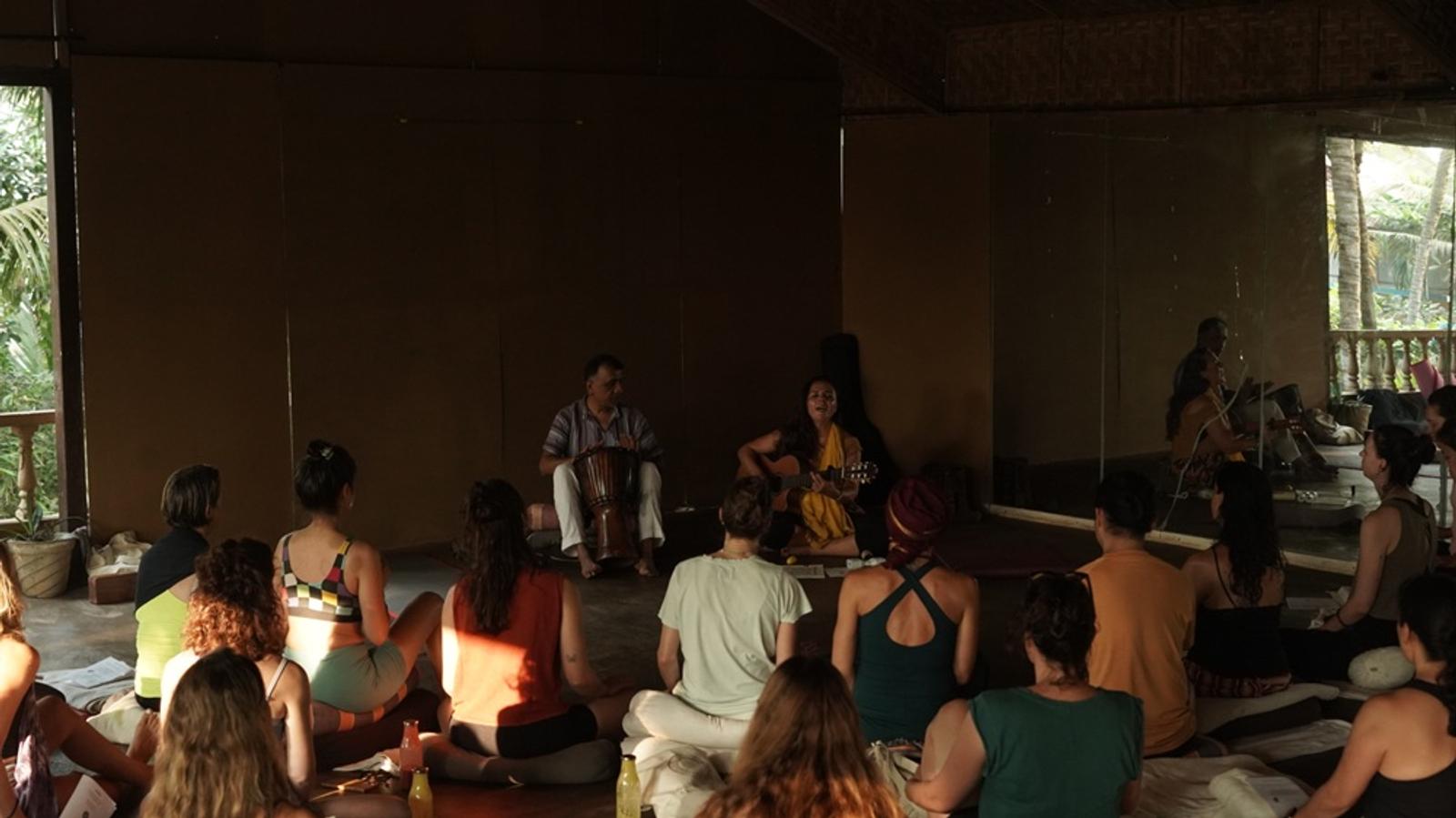
Running a retreat is one of the most significant professional decisions a yoga teacher makes. It is also one of the most commonly under-researched.
The fantasy version is straightforward: you choose a beautiful location, announce the retreat to your community, fill the spots, and spend a week doing what you love in an extraordinary environment. The reality involves logistics, legal questions, pricing models you have not encountered before, and a relationship with a retreat venue that will make or break the experience for both you and your participants.
This guide is written for yoga teachers - and facilitators, breathwork practitioners, meditation guides, and wellness professionals - who are seriously considering hosting a retreat in Goa and want to understand what is actually involved before committing.
Why Goa for a Hosted Retreat
From a logistical standpoint, Goa is one of the most practical destinations in Asia for an international retreat.
Direct flights from the UK (seasonal), the EU, and year-round connections via Mumbai make it accessible for the international market that most wellness teachers are cultivating. The cost of a high-quality retreat experience in Goa is significantly lower than equivalent venues in Bali, Portugal, or Costa Rica - which means you can offer your participants more, charge less, or build better margin into your programme, depending on your priorities.
The time zone (IST, UTC+5:30) is close enough to Europe that participants do not spend the first three days of a retreat recovering from jet lag. The food is diverse, largely vegetarian-friendly, and genuinely good. The infrastructure for wellness tourism - teachers, practitioners, Ayurvedic physicians, equipment, logistics - is established in a way that requires no improvisation.
And the environment. Mandrem Beach, where Nalanda sits, provides the kind of natural setting that does part of the retreat work without your having to engineer it. Guests wake up to the sound of the sea. They practise in open-air shalas. The mornings have a quality that people who have hosted retreats elsewhere describe as unusual - a combination of light, air, and quiet that makes the early session feel effortless.
What a Hosted Retreat at Nalanda Involves
Nalanda has hosted over a thousand retreats since opening - for yoga teachers, movement therapists, breathwork facilitators, therapists, corporate wellness teams, and private groups. We have seen what works and what creates problems, and our infrastructure is built around making the former more likely.
When you host a retreat at Nalanda, the arrangement is essentially a venue partnership. You bring your programme, your participants, and your teaching. We provide the physical and logistical infrastructure: accommodation, food, practice spaces, Ayurvedic and spa treatments (if part of your offering), transfers, and on-the-ground support.
The specifics depend on your group size and what you want to offer. We accommodate groups from eight to sixty participants across our accommodation, which ranges from shared garden rooms to private beach-facing suites. Our yoga shalas - multiple open-air and covered spaces - hold from small private groups to larger open retreats.
We work with you on pricing before the retreat, not after. The accommodation, meals, and facility cost are quoted in full at the start of the conversation, so you know exactly what your per-head costs are and can build your retreat pricing accordingly. This is a part of the process that surprises many first-time retreat hosts: there are no hidden fees that emerge at the end of the week.
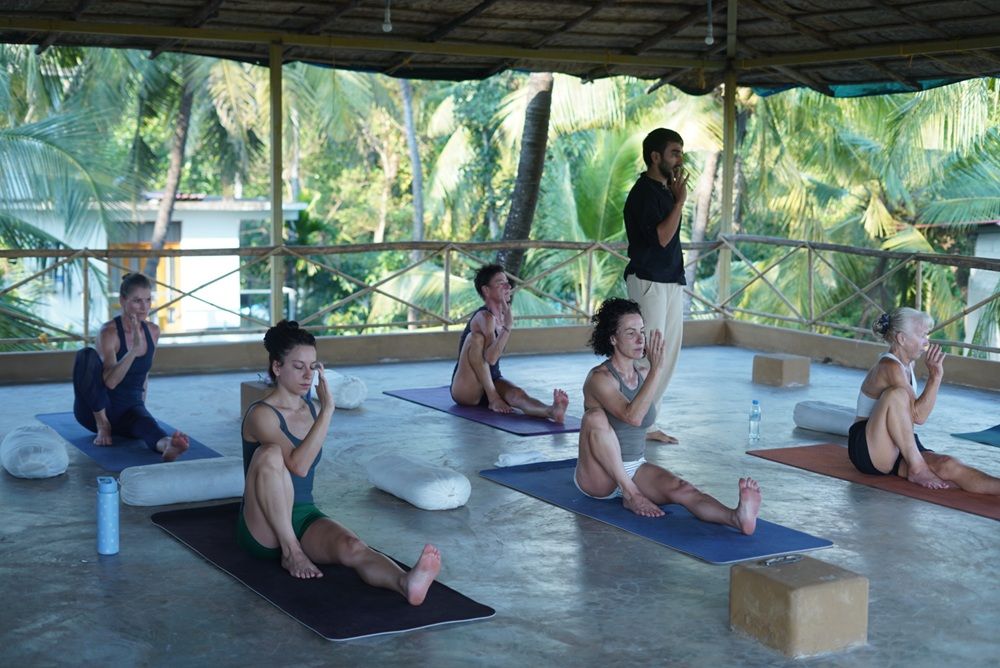
The Practicalities Most Teachers Do Not Ask About
Accommodation allocation: How are rooms assigned among your participants? What happens if two participants who were sharing decide they cannot? What is the protocol if someone needs to leave early? These questions sound administrative until they become your problem at 10pm on the third day of a retreat. At Nalanda, these are resolved in advance through the pre-retreat logistics conversation with our team.
Food and dietary requirements: Our kitchen operates on a full-board basis for hosted retreats. We ask for dietary requirements in advance and accommodate a wide range - vegan, Ayurvedic, gluten-free, and most allergies with adequate notice. What we cannot accommodate is everything at once without warning. A participant who announces a severe nut allergy on arrival is a different situation from one flagged during booking.
Your time during the retreat: Many first-time retreat hosts underestimate how much of their energy goes into managing logistics. The question of whether the water is hot, whether the taxi is coming, whether the room is correct - these are questions that should reach your Nalanda contact, not you. Set this up clearly at the start of the retreat: direct operational questions to the team, substantive questions about the programme to you.
The shape of the day: A retreat that you structure for yourself may not be the same as what serves your participants best. The most successful hosted retreats at Nalanda follow a rhythm that has some version of the following: morning practice at 7:00-8:30am, breakfast, a long open block through the mid-morning, lunch, a rest period that is genuinely protected, an afternoon session at 4:00-5:30pm, dinner, evening gathering or early rest. Deviation from this rhythm - particularly compressing the rest block - tends to create fatigue that shows by day three.
Buffer time: Build one genuine free day or half-day into any retreat longer than five days. Not optional activity time - genuinely unscheduled time. Participants need it. You need it more.
Pricing Your Retreat
This is the area where first-time retreat hosts most commonly make expensive mistakes.
The basic formula: add up your per-head venue costs (accommodation, food, facility fee) and your own costs (flights, visa, travel, any supplementary teachers or practitioners). Add these together. Add your teaching fee per participant - not your hourly rate multiplied by hours, but a genuine assessment of what your programme is worth over five to seven days. Add a contingency of ten to fifteen percent. The result is your minimum price per participant.
Then check the market. What are equivalent retreats in Goa charging? If your minimum price is significantly above the market rate, you have a problem with the package you have put together, not with your pricing. If it is below, you may be undercharging for the value you are delivering.
Discounts for early booking are common and effective for securing the first several spots quickly, which reduces the anxiety of the pre-retreat sales period. Do not discount into the last few spots before the retreat - those spots cost you the same to deliver as the first ones, and guests who pay full price next to guests who paid significantly less create dynamics you do not want to manage.
What Happens After Your First Retreat
The teachers who get the most from hosting at Nalanda are the ones who come back.
Not because we are pushing for repeat business - though we appreciate it - but because the second retreat is always better than the first. You know the space. Your participants arrive with expectations that are accurate. You know which elements of your programme worked in this environment and which need adjustment. The logistics conversation is shorter.
The international market for yoga retreats - UK, Australian, German, Indian urban professional - is growing. The mindful travel experience that teachers can offer in Goa is genuinely in demand. Teachers who establish a consistent annual presence in a location build communities in a way that purely local teaching does not allow.
If you are considering teacher training as a complement to or step before hosted retreats, Nalanda runs both, and the overlap between the two communities - teachers in training and teachers running retreats - is one of the more generative aspects of what happens here.
Quick Answer: How do I host a yoga retreat in Goa?
Identify a venue partner (like Nalanda) that offers a hosted retreat model. Agree on accommodation, food, and facility costs before announcing to participants. Build your pricing from the ground up: venue costs + your own costs + teaching fee + contingency. Structure the retreat day with protected rest time. Outsource logistics to the venue team and focus on the programme.
Ready to explore hosting at Nalanda? Visit https://nalandaretreat.com/host-a-yoga-retreat-goa for current availability. Or explore teacher training at https://nalandaretreat.com/teachers-training-course
Frequently asked questions
How many participants do I need for a hosted retreat at Nalanda?
We work with groups from eight participants upward, though ten to sixteen is the most common range for a first-time hosted retreat. Smaller groups are more intimate; larger groups require more logistical coordination.
Do I need a specific yoga qualification to host a retreat in Goa?
There is no legal requirement in India for yoga teachers to hold specific certifications to teach. However, for the integrity of your programme and the confidence of your participants, holding a recognised 200-hour or 300-hour teacher training certification is standard practice.
Can I bring external practitioners to co-facilitate a retreat at Nalanda?
Yes. We regularly host retreats that combine a primary yoga teacher with a visiting Ayurvedic practitioner, sound healer, or therapist. Coordination of the schedule and any additional facility needs should be communicated to our team in advance.
What is the best time of year to host a retreat in Goa?
October to March is peak season and commands the best marketing story for participants. November and February are particularly popular. The monsoon season (June-September) allows for lower venue costs and a more intimate experience - some teachers specifically choose this window for their most committed participants.
How do I market a retreat in Goa to my community?
Lead with the specifics of what you are offering - the programme, the location, the transformation - rather than with the general idea of a retreat. People sign up for a specific experience, not a category. Early bird pricing, a clear cancellation policy, and detailed information about what is included close sales more reliably than aspirational photography.
What support does Nalanda provide for promoted retreats?
For hosted retreats, we provide a dedicated logistics contact, a property listing on our hosted retreat page, and can co-create content about your retreat for mutual promotion. The programme, the marketing, and the participant relationship remain yours.