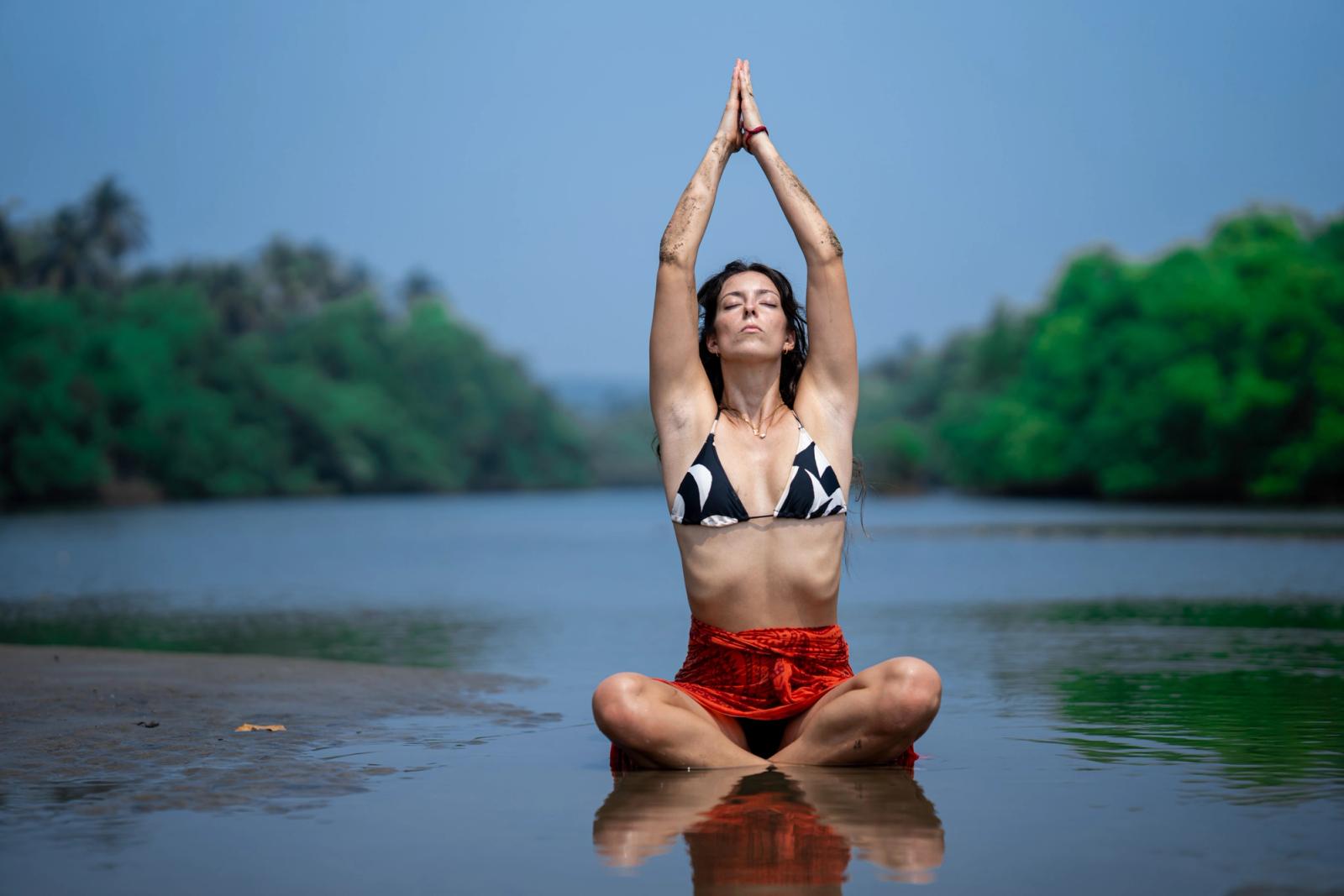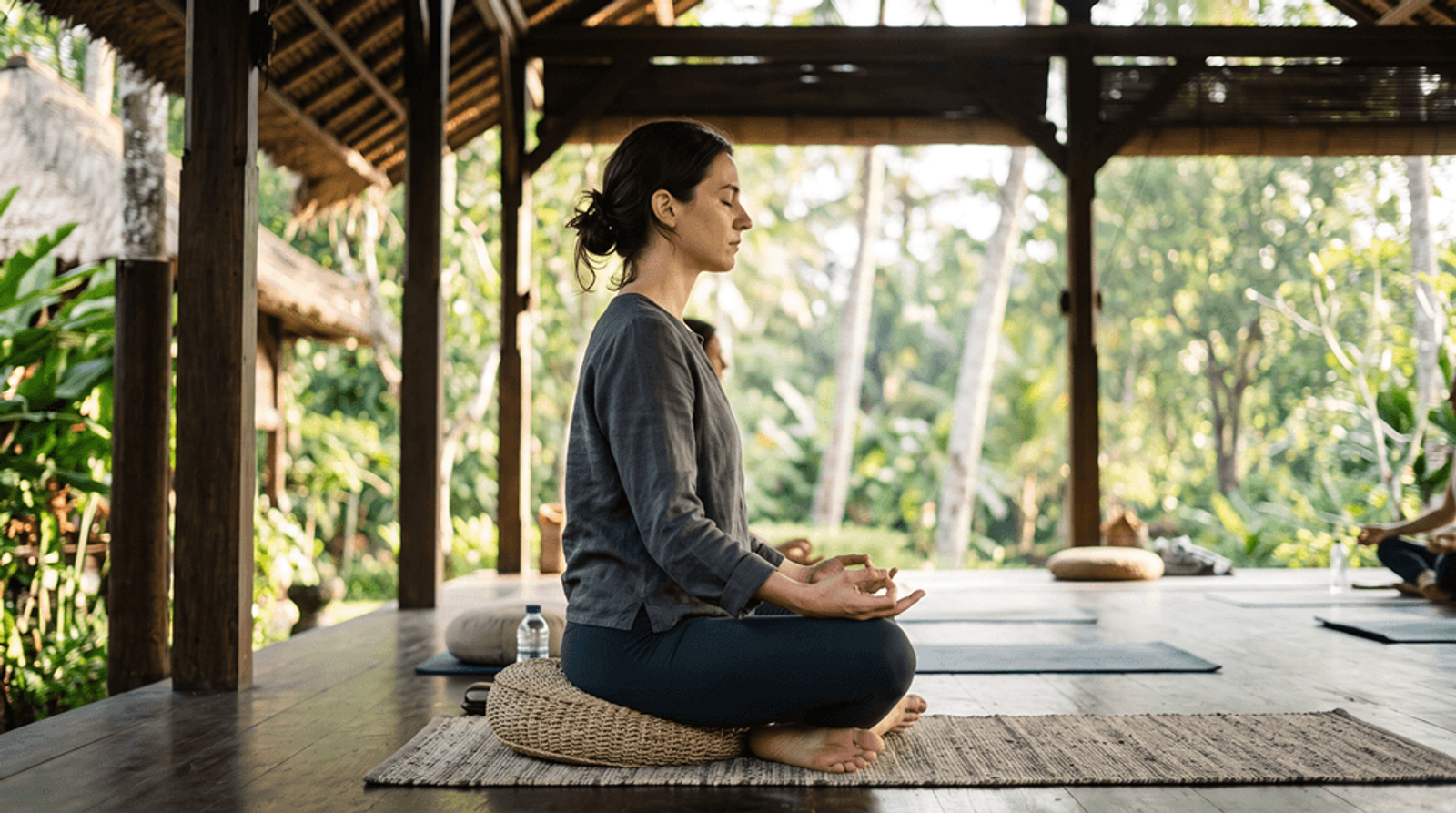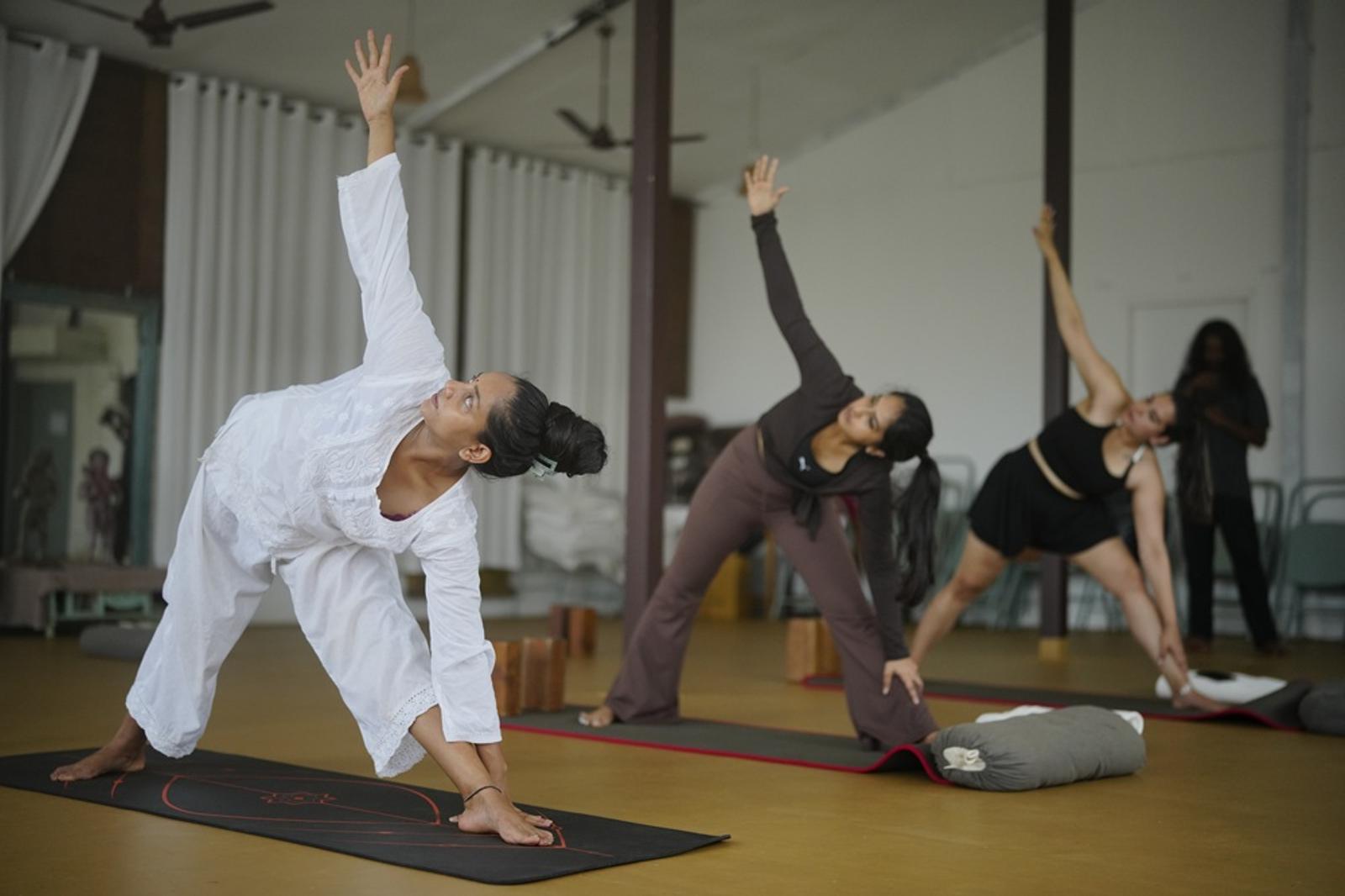
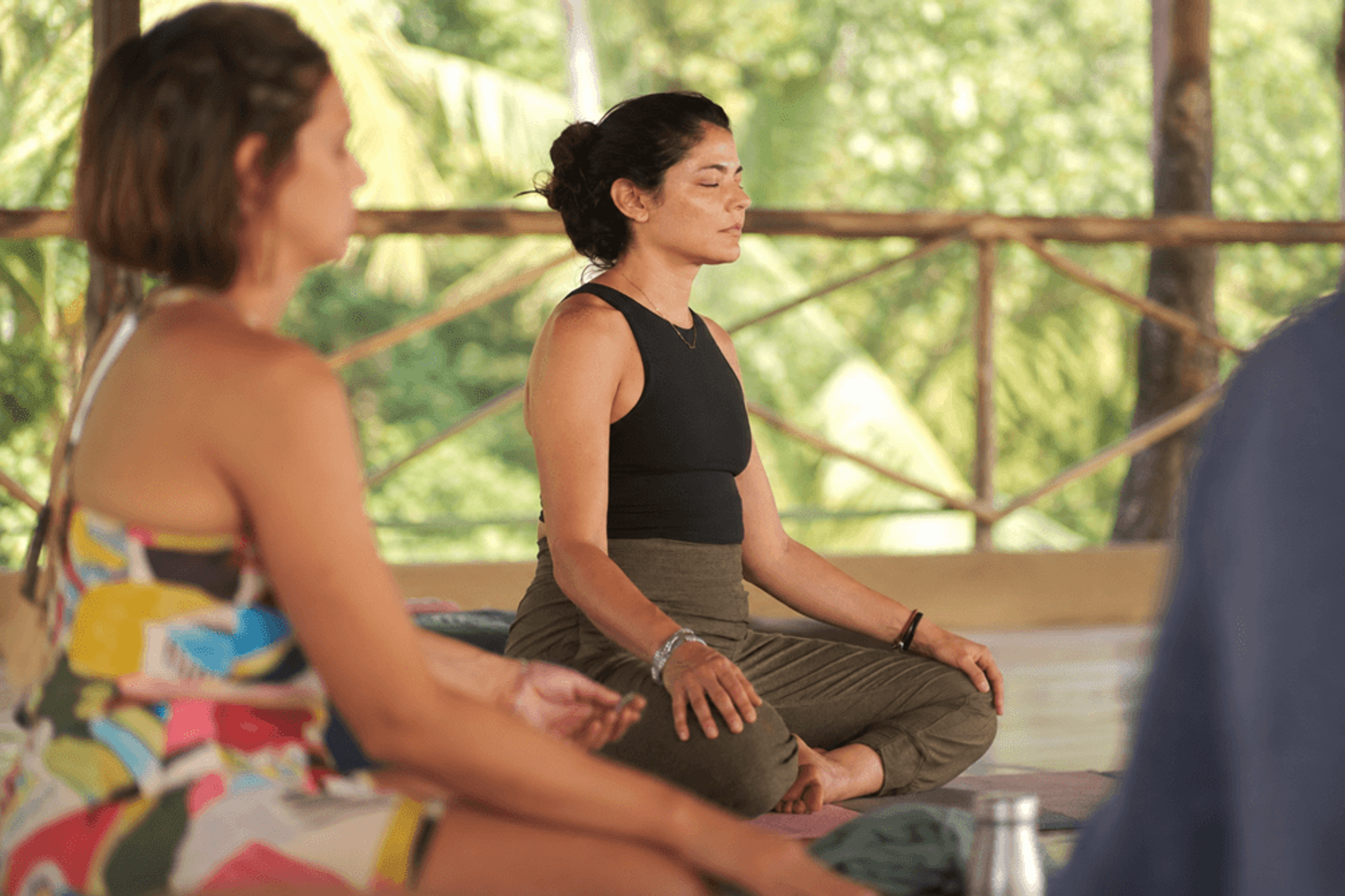
The word meditation covers an enormous range of things. Seated breath awareness. Body scan. Mantra repetition. Yoga Nidra. Pranayama. Vipassana. Sound bath. Trataka. Most people who search for a meditation retreat in Goa are not looking for all of these. They are looking for one thing: help stopping. A place and a structure that gives the busy mind sufficient support to actually become quiet.
This guide covers what a meditation retreat in Goa genuinely involves, what formats are available at Nalanda Retreat on Mandrem Beach, and what to expect if you are either approaching meditation for the first time or returning to it with genuine commitment.
Direct Answer
A meditation retreat in Goa at Nalanda Retreat includes daily Pranayama and seated meditation classes (Tuesday and Thursday mornings, 8am, Beachfront Shala), evening Yoga Nidra sessions, and weekly Sunset Sound Bath experiences. Dedicated meditation programmes integrate these practices within a structured wellness schedule. No prior meditation experience is required for any open class or retreat at Nalanda.
What Meditation at a Retreat Does That Home Practice Cannot
Most people who meditate at home meditate in their bedroom, their living room, or at a desk. The same room where they work, worry, scroll, and sleep. The nervous system holds the history of every room it has inhabited. Calm in a space contaminated by habitual activation is possible, but it is difficult - the body must work against the environmental cues it has learned.
At Nalanda's Beachfront Shala, the setting itself has no such history. The sound is the Arabian Sea. The air is coastal. The room has been used, consistently, for practice only. This is not mystical. It is environmental psychology applied to the nervous system.
The cumulative effect of meditating daily in a supportive environment across five to seven days is genuinely different from meditating sporadically at home. The body develops a reference point for stillness it lacked before. This is what guests take home. The practice itself - whether yoga nidra, pranayama, or seated awareness - becomes more accessible after a retreat because the nervous system now knows what the destination feels like.
Meditation Formats at Nalanda Retreat
Pranayama and Meditation Classes
The Tuesday and Thursday morning Pranayama and Meditation classes, run at 8:00am for 60 minutes in the Beachfront Shala. These are the foundation of Nalanda's meditation offering: classical breathing techniques followed by seated awareness practice. The format changes weekly, ranging from breath-awareness meditation to Yoga Nidra to mantra-based practice.
These classes are open to all levels. The only requirement is the willingness to sit still and breathe. Teachers do not expect you to have an empty mind. They expect you to observe whatever is present, which is a different and considerably more achievable instruction.
Yoga Nidra
Yoga Nidra - the practice of guided conscious rest at the threshold between wakefulness and sleep - is one of the most reliably effective entry points for people who find seated meditation frustrating. It is practised lying down, requires no prior experience, and produces brainwave shifts from beta through alpha to theta within a single session. The full beginner's guide to yoga nidra explains the mechanism in detail.
At Nalanda, Yoga Nidra is incorporated into evening sessions during retreat programmes and into the Sleep Restoration programme as a primary therapeutic modality. It is also part of the 50-hour Yoga Nidra and Breathwork Teacher Training for practitioners wanting to teach it professionally.
Sunset Sound Bath
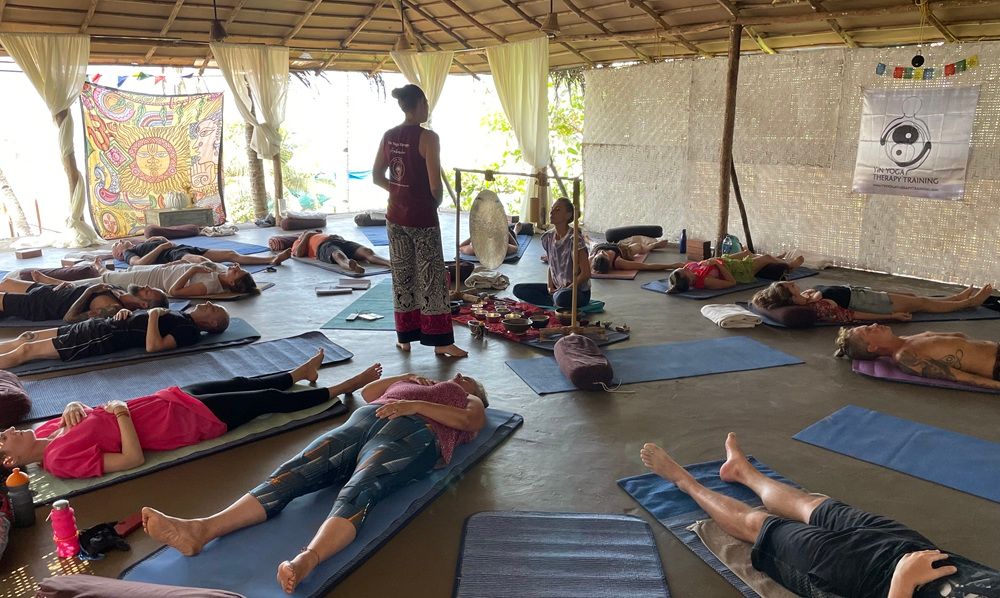
The Wednesday evening Sunset Sound Bath runs at 6:30pm for 60 minutes in the Beachfront Shala. It uses a combination of Tibetan singing bowls, crystal bowls, and drone instruments to induce resonance-based relaxation - a state of deep parasympathetic activation achieved through auditory stimulation rather than deliberate mental effort.
For guests who struggle to access stillness through instruction-based meditation, the Sound Bath is often the session that first demonstrates what the state feels like. It asks nothing of you. You lie down and let the sound do the work.
Pranayama: The Often-Overlooked Gateway
Pranayama - breath regulation - is taught in every yoga tradition as the most direct access point to the nervous system. Where asana (physical posture) affects the body primarily, pranayama directly modulates the autonomic nervous system through the respiratory feedback loop. A pranayama session that extends the exhale consistently activates the parasympathetic branch. This is not metaphorical. It is measurable in heart rate variability data within minutes.
At Nalanda, pranayama is not a warm-up before asana. It is a practice in its own right, taught systematically across the week. For guests who arrive unable to sleep, unable to switch off, or chronically anxious, the pranayama sessions often produce the first reliable experience of genuine calm they have had in months.
What a Meditation-Focused Stay at Nalanda Looks Like
For First-Timers
If meditation is new to you, start with the First Step Wellness Awakening (3 nights) which introduces pranayama, seated meditation, and Yoga Nidra within a structured but accessible schedule. This gives you enough time to experience each format without commitment to a longer programme.
For a first-timer who also wants Ayurvedic context, the Stress Release and Emotional Balance programme (7 nights) integrates daily meditation with Soma Cove treatments specifically targeting the neurological patterns underlying stress and anxiety. If you recognise the signs your nervous system is running in survival mode, this programme addresses that pattern directly.
For Serious Practitioners
Experienced meditators who want depth - in technique, in tradition, or in the integration of meditation with Ayurveda - will find the Yoga and Ayurveda Immersion retreat and the Yoga Immersion retreat both offer serious practice schedules taught by senior teachers.
The 50-hour Yoga Nidra and Breathwork Teacher Training is available for practitioners wanting formal qualification in these modalities. It is a training programme, not a retreat - the pace and depth are different.
Drop-In Without a Full Programme
The activities schedule allows visitors and non-programme guests to drop into specific classes. The Pranayama and Meditation sessions (Tue, Thu) and the Sunset Sound Bath (Wed) are the most relevant for meditation-focused visitors. A single week in Mandrem attending these three sessions, combined with the quality of the environment and the Ayurvedic food at Chia Lounge, constitutes a genuine meditation retreat even without a formal programme booking.
Frequently asked questions
Is Goa a good place for a meditation retreat?
Yes, particularly North Goa. Mandrem Beach, where Nalanda sits, is one of the quietest stretches of coastline in the state. The combination of low noise, natural beauty, and established meditation infrastructure - teachers, shalas, a schedule built around practice - makes it genuinely suitable for meditation retreats.
Do I need experience to attend a meditation retreat in Goa?
No. Nalanda's open meditation classes and retreat programmes are designed for all levels including complete beginners. The Pranayama and Meditation classes, the Sound Bath, and the Yoga Nidra sessions all begin with enough instruction that no prior experience is assumed.
What is the difference between a meditation retreat and a yoga retreat in Goa?
A yoga retreat primarily centres on asana (physical yoga) with meditation as a supporting element. A meditation retreat centres on meditation practices - pranayama, Yoga Nidra, seated awareness - with physical practice as a supporting element. At Nalanda, most programmes integrate both. The Sleep Restoration programme is the most meditation-intensive, using Yoga Nidra as its primary modality.
What type of meditation is taught at Nalanda?
Nalanda teaches multiple traditions: classical pranayama-based meditation, Yoga Nidra (Bihar School tradition), sound bath meditation, and mindfulness-based awareness practice. The Saturday Workshop rotates through specific techniques each week, including Ayurveda Basics and other themed sessions.
Can I combine a meditation retreat with Ayurvedic treatment?
Yes, and this is often the most effective combination. Ayurvedic Shirodhara in particular is described in classical texts as a preparation for meditative states - the sustained oil stream over the forehead induces a specific neurological response that makes seated meditation more accessible. Many guests book both within the same stay.
What is Yoga Nidra and how is it different from meditation?
Yoga Nidra induces a state between wakefulness and sleep - the theta brainwave range - while you lie down. Regular meditation maintains waking awareness. Both are valuable; Yoga Nidra is often easier to access for beginners because it does not require sitting with an active mind.