Most of us know what it feels like to be tired but unable to sleep. You lie in the dark, your body exhausted, your mind still processing a Tuesday. Yoga nidra is not a cure for this. But for a significant number of people, it is the thing that finally shifts it. If you already know the signs that your nervous system is running in survival mode, this piece explains what they look like from the inside.
This guide explains what yoga nidra actually is, what happens in your body and brain, and why doing it at a retreat - specifically through the Sleep Restoration programme at Nalanda - produces results that a recording on your phone cannot quite replicate.
Direct Answer
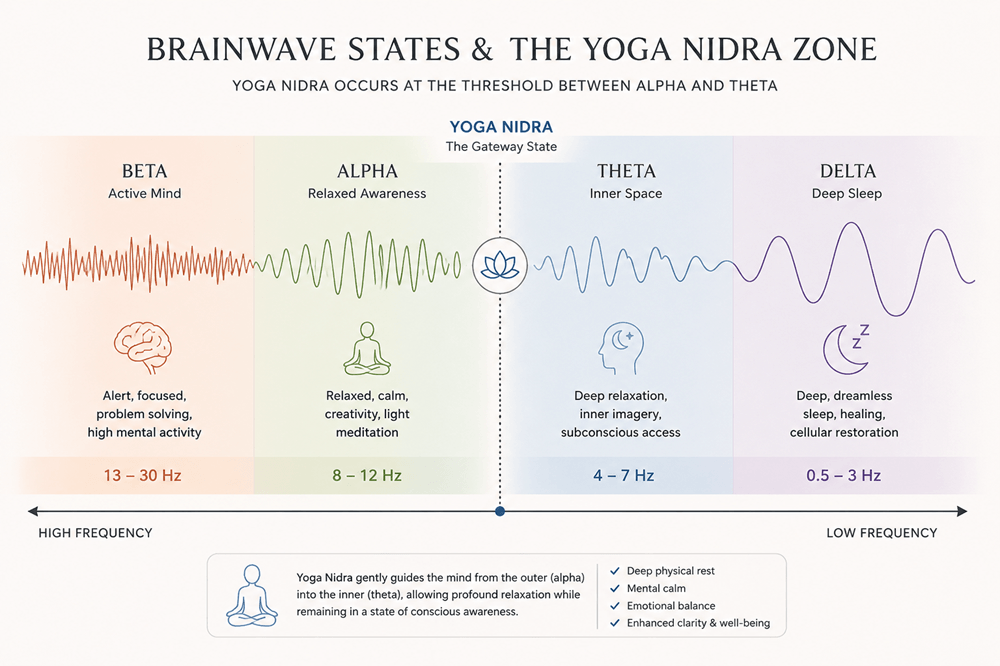
Yoga nidra is a guided meditation practice that brings the mind to the threshold between wakefulness and sleep - the state where brainwaves slow from beta to alpha to theta. Practised lying down for 30 to 60 minutes, it induces deep rest without unconsciousness. Research links regular practice to reduced cortisol, improved sleep architecture, and lower anxiety. No prior meditation experience is required.
What Yoga Nidra Actually Is
The name translates as "yogic sleep," though this is slightly misleading. Yoga nidra is not sleep. It is the hypnagogic threshold - the liminal state the brain passes through in the few minutes between wakefulness and unconsciousness. You are not awake in the ordinary sense, and you are not asleep. You are in a state of deep, conscious relaxation.
In this state, brainwaves slow from beta through alpha and into theta - the frequency associated with the most restorative phases of natural sleep. The body undergoes the same physiological restoration as deep sleep, but a thread of consciousness remains. This is why the retreat context for yoga nidra produces different results than practising from a recording at home.
Where Yoga Nidra Comes From
Yoga nidra in its modern form was systematised by Swami Satyananda Saraswati of the Bihar School of Yoga in the 1960s and 1970s. At Nalanda Retreat, evening yoga nidra sessions follow this classical approach. The structure is not accidental - each phase serves a specific neurological function.
For teachers who want to go deeper into this practice and teach it themselves, Nalanda offers a 50-hour Yoga Nidra and Breathwork Teacher Training on the Mandrem Beach campus.
What Happens in Your Brain During Yoga Nidra
The Theta State and Why It Matters
Theta brainwaves are produced during the most restorative phases of natural sleep. Many people, particularly those living under chronic stress, spend very little time in the theta state regardless of how many hours they spend in bed. This is why the Stress Release programme at Nalanda incorporates yoga nidra as a primary modality alongside Shirodhara: both target the same neurological goal via different pathways.
Cortisol and the Nervous System
Chronic stress keeps the HPA axis in sustained activation. Cortisol stays elevated, disrupting sleep architecture, suppressing immune function, and gradually wearing down the body's capacity for recovery. Yoga nidra, practised consistently, has been shown in multiple studies to reduce salivary cortisol and increase parasympathetic tone.
How a Yoga Nidra Session Works: Stage by Stage
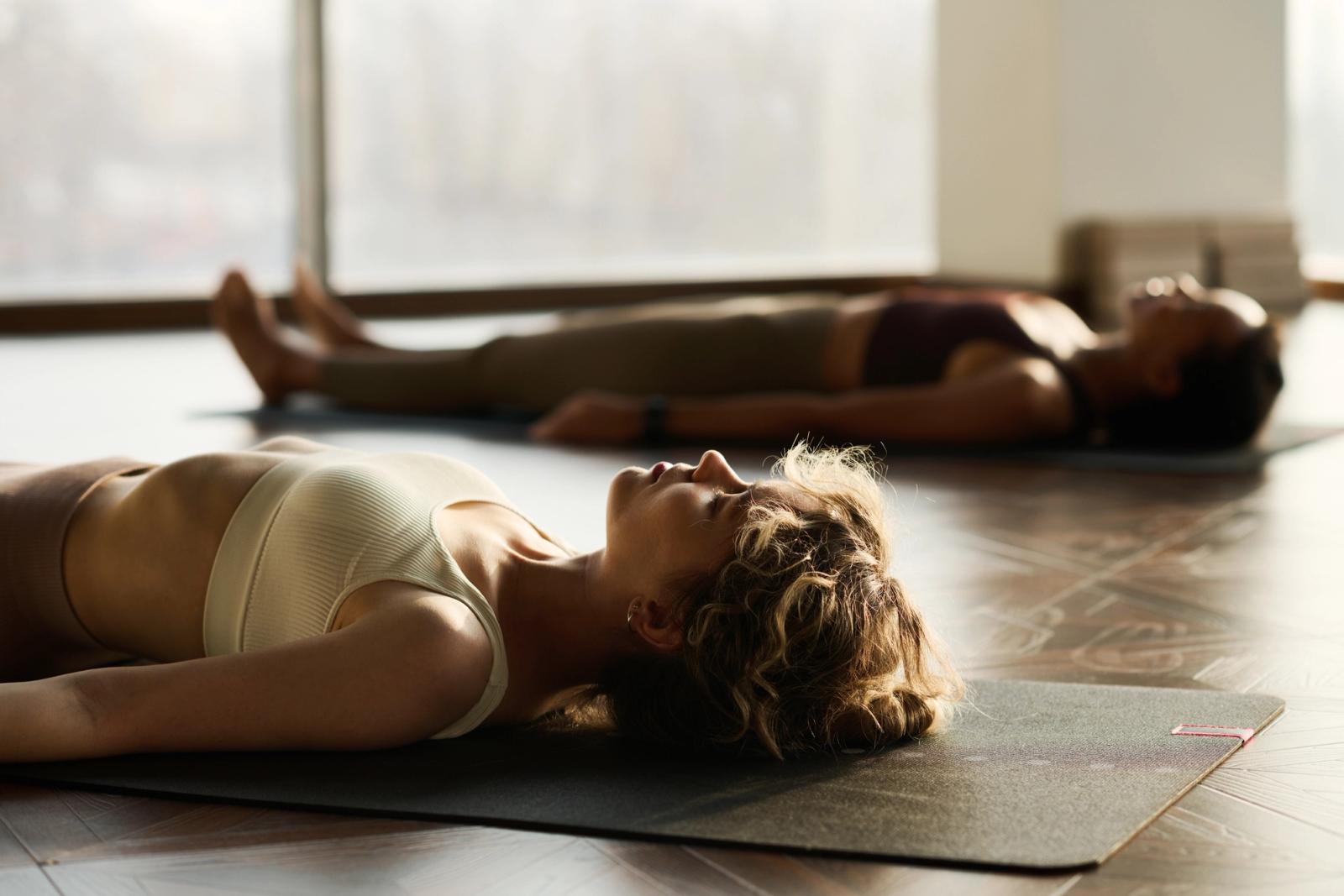
Settling and Sankalpa: You lie on your back. The teacher guides systematic body relaxation. You set a brief personal intention (sankalpa), planted in the subconscious at the moment between waking and sleep.
Rotation of Consciousness: The teacher's voice moves attention systematically through each part of the body. This is attention without effort. Most people find this deeply strange the first time. By the third session, it typically induces an almost immediate state change.
Breath Awareness: Attention moves to the natural rhythm of breathing without any attempt to control it.
Pairs of Opposites: The teacher names pairs - heaviness and lightness, warmth and cold, pain and pleasure - inviting the mind to hold both simultaneously. This deepens the theta state effectively.
Visualisation: Rapid images are offered without explanation. The mind, in theta state, processes these differently than in ordinary consciousness.
Return and closing Sankalpa: The teacher gradually guides attention back toward external awareness.
Why Yoga Nidra at a Retreat Works Differently
When you practise yoga nidra from an app in your bedroom, your nervous system is calibrated to that room. At Nalanda, the entire structure of the day reduces activation before the evening session. Morning practice, a warm midday meal at Chia Lounge, a protected rest period, the absence of screen stimulation - all reduce the distance the nervous system has to travel when yoga nidra begins.
For guests who want to pursue yoga nidra as a tool beyond their own practice, the 50-hour Yoga Nidra and Breathwork Teacher Training gives a full grounding in the Bihar School tradition and the capacity to teach it to others.
What Yoga Nidra Is Used For
- Post-traumatic stress: The US Department of Veterans Affairs has studied iRest (a clinical adaptation of yoga nidra) as an adjunct treatment for combat-related PTSD.
- Chronic pain: The dissociation from body sensation that yoga nidra cultivates can reduce the emotional amplification of pain signals.
- Anxiety and burnout: Sustained parasympathetic activation retrains the HPA axis over time.
- Insomnia: Yoga nidra teaches the nervous system to approach sleep without effort. The Sleep Restoration programme at Nalanda is specifically designed for this.
If you recognise these patterns in your own body, the signs your nervous system needs a reset is a useful first read.
Frequently asked questions
Do I need to meditate or do yoga to benefit from yoga nidra?
No. Yoga nidra requires no physical ability, no prior meditation experience, and no spiritual orientation. You lie down and listen.
What if I fall asleep during yoga nidra?
Falling asleep is not a failure. It is often what the body needs. The practice has already done something in the stages before sleep arrived.
How many sessions does it take to notice a difference?
Most people notice something after two or three sessions. At a retreat, where sessions occur every evening, the cumulative effect is faster.
Is yoga nidra the same as hypnosis?
They share surface similarities but the mechanisms differ. Yoga nidra does not introduce suggestions for behavioural change. It is a practice of conscious rest, not a therapeutic intervention on the content of the mind.
Can I practise yoga nidra if I have insomnia?
Yes. The 50-hour Yoga Nidra and Breathwork Teacher Training at Nalanda covers the Bihar School tradition in full and qualifies you to teach it professionally.