Quick Answer
Ashtanga yoga retreats in Goa offer structured Mysore-style and led primary series practice in a setting built specifically for serious practitioners. Nalanda Retreat at Mandrem Beach, North Goa hosts dedicated Ashtanga programmes including the Rocket and Ashtanga Retreat and the 50-Hour Advanced Ashtanga Teacher Training. The conditions at Mandrem, open-air shalas, consistent early-morning temperatures, and a residential setting free of urban distraction, suit the Ashtanga format well.
Ashtanga yoga has a particular kind of practitioner: self-motivated, practice-led, more interested in the discipline than in the social media version of it. If that describes you, the question of where to deepen or study is less about aesthetics and more about conditions. Nalanda Retreat at Mandrem Beach is a setting built specifically for serious yoga practice.
Goa has a long relationship with serious yoga practice. Mandrem Beach, specifically, sits at the quieter end of North Goa, far enough from the tourist centres to keep the environment useful for early mornings and sustained practice, close enough to everything that getting there from the UK, Australia, or most of India is straightforward.
What Ashtanga yoga actually is
Ashtanga is a structured, sequential practice developed by Sri K. Pattabhi Jois in Mysore. It works through fixed series of postures linked by breath (vinyasa), with drishti (gaze points) and bandhas (internal energy locks) as the three key principles.
The Primary Series is the foundation: a sequence of standing, seated, and finishing postures that takes an experienced practitioner around 90 minutes. The practice is always the same sequence, always in the same order. That repeatability is not a limitation but the point: you are working with the same material every day, which means you can track what's changing and what isn't.
Mysore style vs led practice
In Mysore-style practice, each student works through the series at their own pace while a teacher moves through the room, giving adjustments and adding poses when you're ready for them. In a led class, the teacher calls the vinyasas and everyone moves together.
Most dedicated Ashtanga retreats offer both formats across the week. Mysore-style in the morning, led class or workshops in the afternoon. The combination is how most people make the fastest progress.
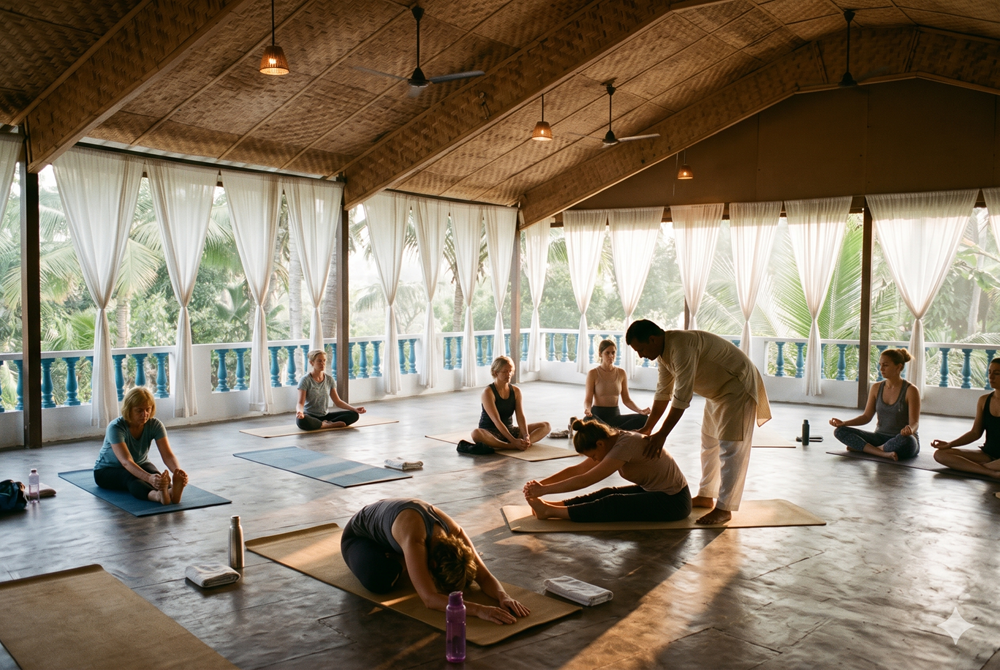
Ashtanga programmes at Nalanda Retreat
Nalanda hosts Ashtanga-focused programmes at Mandrem Beach within its broader retreat and teacher training calendar. The two primary options are:
Rocket and Ashtanga retreat
The Rocket sequence is a modified Ashtanga Primary and Second Series practice developed by Larry Schultz, designed to be accessible to practitioners who are working toward the traditional series. The Rocket and Ashtanga Retreat at Nalanda combines both formats across the programme.
50-Hour Ashtanga yoga advanced teacher training
For certified teachers. The 50-hour advanced Ashtanga TT runs 10-16 January 2027 and is delivered by Tribe Goa (Scarlet Dee and Gaia Ceccarelli). Curriculum covers the modified Ashtanga Primary Series with alignment and bandha focus, philosophy (Patanjali's Eight Limbs), hands-on adjustment methodology, and anatomy for injury prevention.
What to expect at a Goa Ashtanga retreat
A well-structured Ashtanga retreat in Goa will typically follow a pattern:
- Morning practice: Mysore-style or led Primary Series, usually starting at 6:30-7am before the heat builds
- Breakfast after practice: the body needs to refuel after an intense Mysore session
- Workshops or philosophy talks: late morning or afternoon, covering specific posture work, breathwork, or text study
- Evening practice: restorative, pranayama, or a short-led session
- Time for self-study, rest, and the beach: Ashtanga is a demanding practice and recovery is part of it
Rest days (traditionally Saturday in the Ashtanga calendar, plus moon days) give the body time to integrate. A residential retreat that follows this structure tends to produce more sustained improvement than intensive daily practice with no recovery built in.
Why Mandrem Beach works for Ashtanga
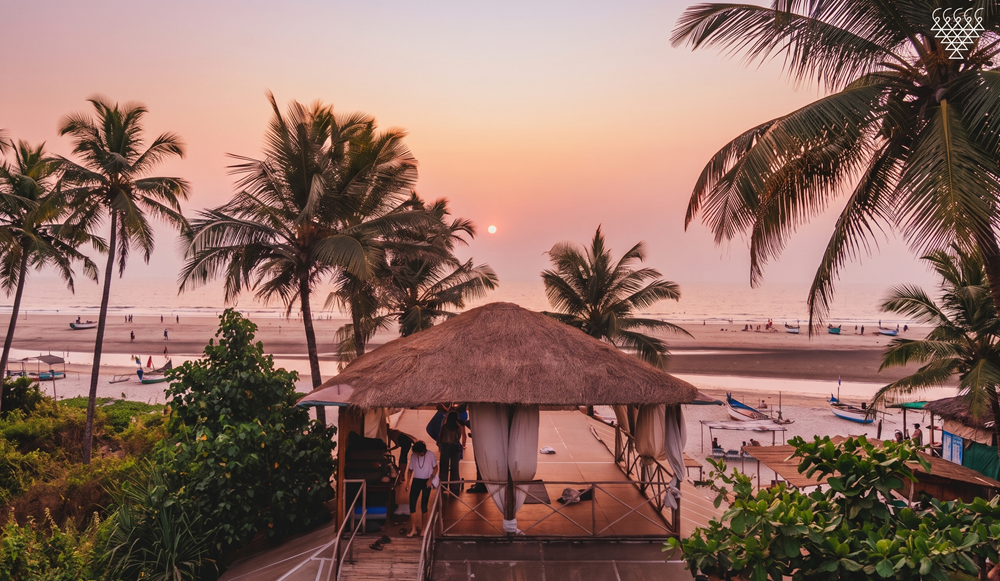
The conditions at Mandrem Beach are specific. The beach faces west, which means mornings on the shala side of the property are shaded and calm. October through March, the temperature sits in the mid-20s during practice hours. Humidity is lower than inland alternatives.
North Goa has a quieter character than the more developed stretches further south. Mandrem is a significant step quieter again: fewer bars, less traffic, more of the early-morning silence that Ashtanga practice benefits from.
Nalanda sits directly on the beach. The practice shalas are open-air with ocean proximity. The grounds include gardens, two pools, and a private beach access. The accommodation at Nalanda ranges from hillside rooms to beachside options. For a month-long immersion or a week-long retreat, this is a functional environment, not just an aesthetically pleasing one.
Getting to Mandrem from the UK and Australia
UK: Direct flights from London to Goa International Airport (GOI) operate throughout the winter season. Flight time is approximately nine to ten hours. Mandrem is 45 minutes from the airport by taxi.
Australia: Connecting flights via Dubai, Abu Dhabi, or Kuala Lumpur reach Goa in approximately 14-16 hours total travel time. The Goa winter season aligns with Australian summer, making it a popular timing for Australian practitioners.
Visa: UK and Australian nationals require an e-Visa for India. The 30-day e-tourist visa is available online. For a week-long retreat, a 30-day visa covers travel either side of the programme comfortably. See our full guide: yoga holiday from the UK to Goa.
Frequently asked questions
What level of Ashtanga practice do I need for a retreat in Goa?
It depends on the programme. Most Ashtanga retreats at Nalanda are structured for practitioners with a consistent existing practice, typically the Primary Series at least to the seated postures. The 50-hour TT is an advanced programme for certified teachers. The Rocket and Ashtanga Retreat is accessible to practitioners who have a solid foundation.
Is Goa good for Ashtanga yoga?
Yes. The conditions in Goa from October to March suit Ashtanga practice well: consistent warm temperatures, open-air shala settings, and a quiet location in Mandrem that supports early morning practice routines. Goa has a long history as a destination for serious yoga practitioners.
What's the difference between the Rocket sequence and Ashtanga Primary?
Ashtanga Primary Series follows the traditional Jois sequence exactly, posture by posture. The Rocket sequence, developed by Larry Schultz, reorganises and modifies postures from Primary and Second Series to make the practice accessible to a wider range of bodies, particularly those still building the flexibility for some of the Primary Series binds.
Can I combine an Ashtanga retreat with time off in Goa?
Yes. Most retreat formats at Nalanda include rest days. Mandrem itself is a quiet beach village. Anjuna, Vagator, Arambol, and Calangute are all within 30-45 minutes. A retreat format that ends on a Friday gives you the weekend in Goa before returning home.
Are there Ashtanga teacher training options at Nalanda in January 2027?
Yes. The 50-Hour Ashtanga Advanced Teacher Training runs 10-16 January 2027, delivered by Tribe Goa (Scarlet Dee and Gaia Ceccarelli). It is a Yoga Alliance CPD programme for certified teachers. Price on enquiry at nalandaretreat.com.