Quick Answer
The 200-hour yoga teacher training at Nalanda Retreat is a Yoga Alliance certified, 28-night residential programme running 3-31 January 2027 at Mandrem Beach, North Goa. Delivered by Tribe Goa (17+ years of teacher training), it covers asana, pranayama, philosophy, anatomy, sequencing, and teaching methodology. Shared accommodation, three vegetarian meals daily, and course materials are included. Price on enquiry.
January in Goa is a considered choice for teacher training. The weather is settled, the retreat season is at its peak, and the programme sits inside a residential environment at Nalanda designed for sustained practice.
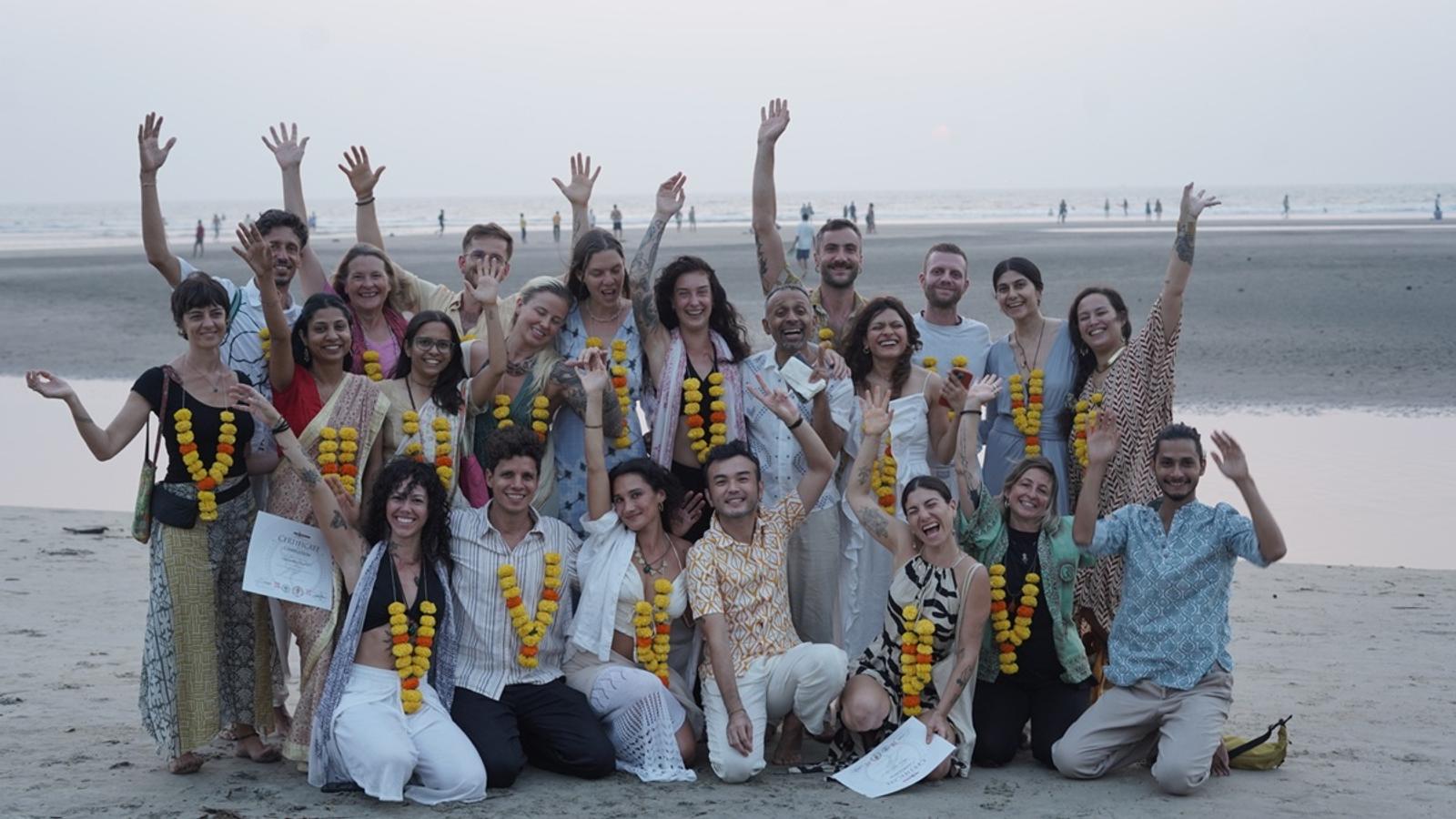
This is not a crash course. A 200-hour residential programme is 28 nights of concentrated study - a Yoga Alliance certification, a teaching methodology to put to work immediately, and the kind of clarity about practice that a classroom course does not produce.
Who runs the programme
The January 2027 intake is led by Tribe Goa, a Yoga Alliance registered school with more than 17 years of teacher training experience. The lead teachers are Scarlet Dee and Gaia Ceccarelli, both registered yoga educators with established teaching practices.
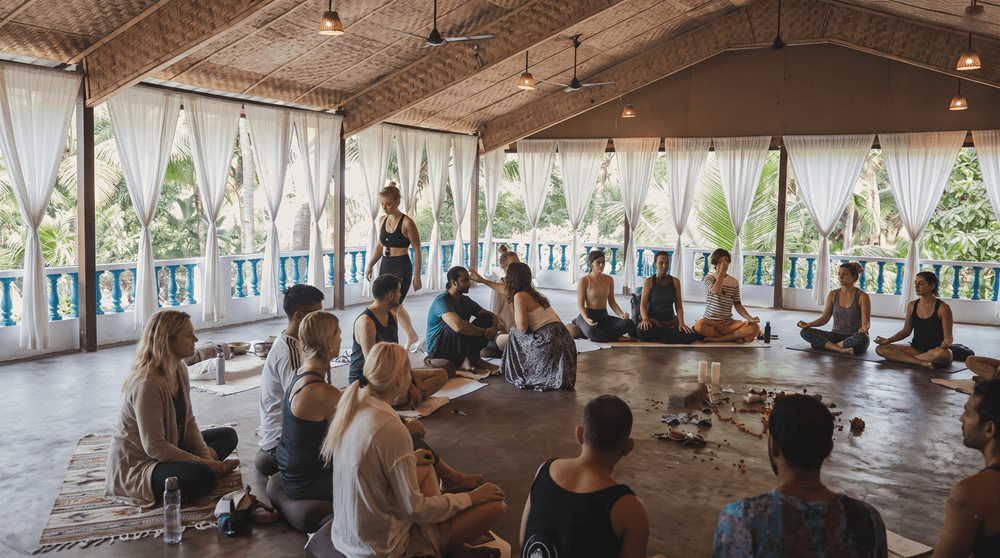
Tribe Goa trains at Nalanda Retreat, which provides the residential setting, the meals, and the facilities. The shala, the grounds, and the beach are yours for the full month.
What the curriculum covers
The 200-hour curriculum is structured across five areas. Each one builds on the others, so the programme works as a coherent whole rather than a collection of separate modules.
Asana practice and sequencing
Daily asana sessions run across multiple yoga styles, with emphasis on alignment, breath integration, core activation, bandha awareness, and spinal mechanics. The teaching methodology component works through sequencing principles: how to structure a class for different levels, how to create intelligent transitions, and how to modify for diverse bodies in a real classroom.
Pranayama, meditation, and mindfulness
Pranayama is taught as a structured practice, not a warmup. You will work through breath techniques with a clear understanding of their physiological and energetic effects. For a detailed look at what this involves, see our practitioner's guide to pranayama. Meditation and mindfulness practices are woven through the programme rather than kept separate.
Yoga philosophy, ethics, and history
Patanjali's Yoga Sutras, the lineages, the eight limbs, the yamas and niyamas as they apply to a teaching practice. This is not an academic module. It is applied: how these frameworks shape what you do in a classroom and how you conduct yourself as a teacher.
Anatomy and alignment
Movement intelligence, joint safety, nervous system awareness, and injury prevention. Trauma-informed practice principles are covered within the anatomy module, including conscious hands-on adjustment technique. For teachers who want to specialise further, Nalanda also offers a dedicated 50-Hour Vinyasa Adjustments module as a CPD follow-on.
Teaching methodology and practicum
Verbal cueing, sequencing labs, practicum sessions with peer feedback, and one-on-one mentorship from a senior teacher. You graduate having taught, not just having studied teaching.
The 28 nights: what is included
The programme runs 3 January to 31 January 2027. Arrival is on 3 January with an opening ceremony at 4pm. The closing ceremony is midday on 31 January. View the 200-hour YTT programme page for the latest details.
Included in the training fee:
- Full 200-hour curriculum with Yoga Alliance certification
- Shared accommodation for 28 nights at Nalanda Retreat
- Three vegetarian meals daily: morning green smoothie, healthy lunch buffet, dinner
- Two purification days with meals included (fasting optional, regular meals available)
- Course manual and all study materials
- One-on-one feedback session with a senior teacher
Not included: flights, visa, airport transfers, personal expenses, optional excursions, massages or additional Soma Cove treatments, travel insurance, laundry, or single room upgrades (available on request).
Why January works for teacher training
January in Goa sits within the prime retreat season. North Goa's weather in January is dry, mid-20s Celsius during the day, cooler in the evenings. It is comfortable for extended physical practice without the heat that builds from March onward.
For UK participants specifically, January offers a clean break from the post-Christmas period. You return in February with a certification, a teaching practice, and a month of warm-weather clarity behind you. See our guide to planning a yoga holiday from the UK for travel logistics.
Getting to Mandrem from the UK
Direct flights operate from London Heathrow and London Gatwick to Goa International Airport (GOI/Dabolim) during the winter season. Flight time is approximately nine to ten hours. Mandrem Beach is around 45 minutes north of the airport by taxi or transfer.
Visa: UK nationals require an e-Visa for India. The 30-day e-tourist visa is straightforward to apply for online via the official Indian e-Visa portal. Apply at least four business days before travel. The January programme runs a full 28 nights, so a 30-day visa covers the training with a few days either side. Contact Nalanda if you need help with arrival logistics.
Who this training is for
The 200-hour programme is structured for practitioners who want to teach, and for experienced yogis who want a deeper understanding of their own practice. You do not need an existing teaching background.
Tribe Goa describes the programme as open to dedicated practitioners from India, the UK, and worldwide. The residential setting at Nalanda and Yoga Alliance accreditation make it a practical choice for people who want a qualification they can use immediately after returning home.
If you are based in the UK and have been comparing courses in Bali, Sri Lanka, or UK-based training centres, the Goa option often comes out ahead on the combination of setting, cost, and the immersive residential structure. Alongside the 200-hour, Nalanda also runs a range of specialist 50-hour CPD modules for teachers who want to build on a foundation qualification.
The difference between a residential and a non-residential training
Most UK-based teacher training happens over weekends, stretched across six to eighteen months. You learn in a familiar environment and carry your daily life into the process.
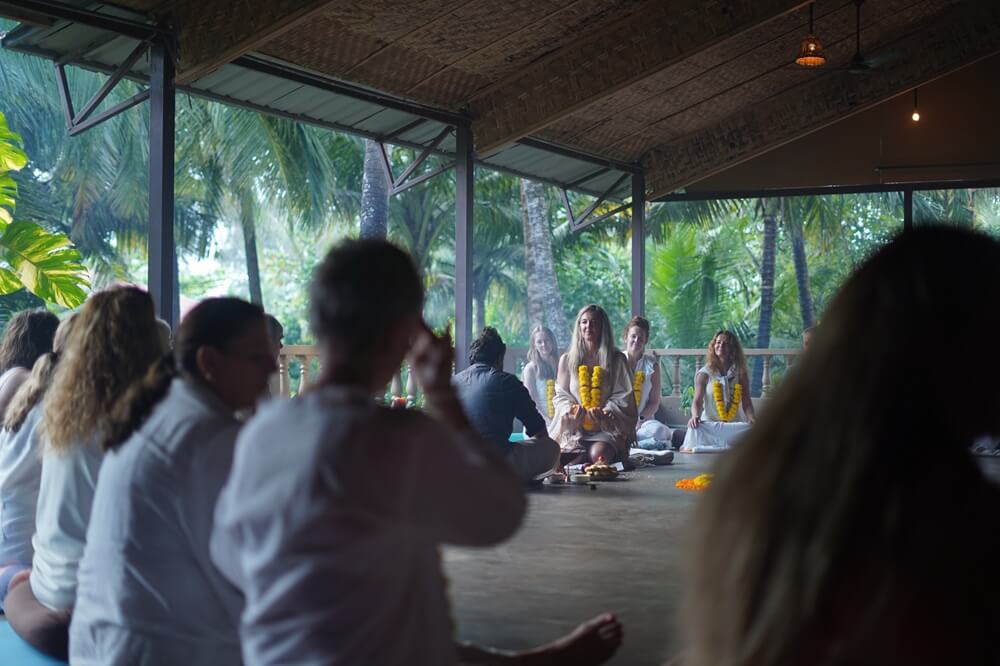
A residential programme removes that friction. Every meal, every conversation, every morning is part of the same context. The study compounds differently because there is no commute, no inbox, and no context-switching. Most people who have done both describe the residential experience as meaningfully faster to integrate, even at the same hour count.
That is not a marketing point. It is a practical observation about how immersive learning environments work, which is why Yoga Alliance and most established training bodies still favour the residential format for foundation certifications. If you want to understand what a first retreat at Nalanda feels like before committing to a 28-night training, read what to expect on your first yoga retreat in Goa.
After the programme: your Yoga Alliance registration
On completion of the 200-hour programme, you are eligible to register as a Registered Yoga Teacher (RYT 200) with Yoga Alliance. This is the recognised standard for teaching at studios, gyms, wellness centres, and retreat venues worldwide.
The certification is internationally portable. UK studios, European retreat centres, and venues across Asia recognise Yoga Alliance credentials. It is the practical baseline for working as a yoga teacher in most contexts. For teachers who want to continue building their portfolio after certification, the 50-Hour Ashtanga Advanced TT and the 50-Hour Yoga Nidra and Breathwork TT both run at Nalanda alongside the 200-hour programme.
Frequently asked questions
What is included in the 200-hour YTT at Nalanda?
The programme includes 28 nights of shared accommodation, three vegetarian meals daily, the full curriculum and course manual, a Yoga Alliance certified 200-hour certificate, and a one-on-one feedback session with a senior teacher. Flights, visa, transfers, and personal expenses are not included.
Is the 200-hour teacher training at Nalanda Yoga Alliance certified?
Yes. The programme is delivered by Tribe Goa, a Yoga Alliance registered school. Graduates are eligible to register as RYT 200 (Registered Yoga Teacher, 200 hours) with Yoga Alliance on completion.
Do I need previous teaching experience to apply?
No teaching experience is required. The programme is structured for dedicated practitioners who want to teach, as well as for experienced yogis who want to deepen their personal practice and understanding of yoga methodology.
How do I get from the UK to Nalanda Retreat in Goa?
Direct flights from London Heathrow and Gatwick operate to Goa International Airport (GOI) during the winter season. The flight takes around nine to ten hours. Nalanda Retreat is approximately 45 minutes north of the airport by taxi. UK nationals require an e-Visa for India, available online.
What is the Yoga Alliance registration process after the programme?
After completing the 200-hour certified programme, you register directly with Yoga Alliance as an RYT 200. The process involves submitting your training certificate and completing the online registration. Your school, Tribe Goa, provides the documentation needed for this registration.
Are there other teacher training options at Nalanda in January 2027?
Yes. Alongside the 200-hour programme (3-31 January 2027), Nalanda also hosts a 50-Hour Ashtanga Advanced TT (10-16 January 2027) for certified teachers looking to deepen their Ashtanga practice. Both programmes run concurrently on the same campus.