At 6am, Mandrem Beach belongs to no one in particular.
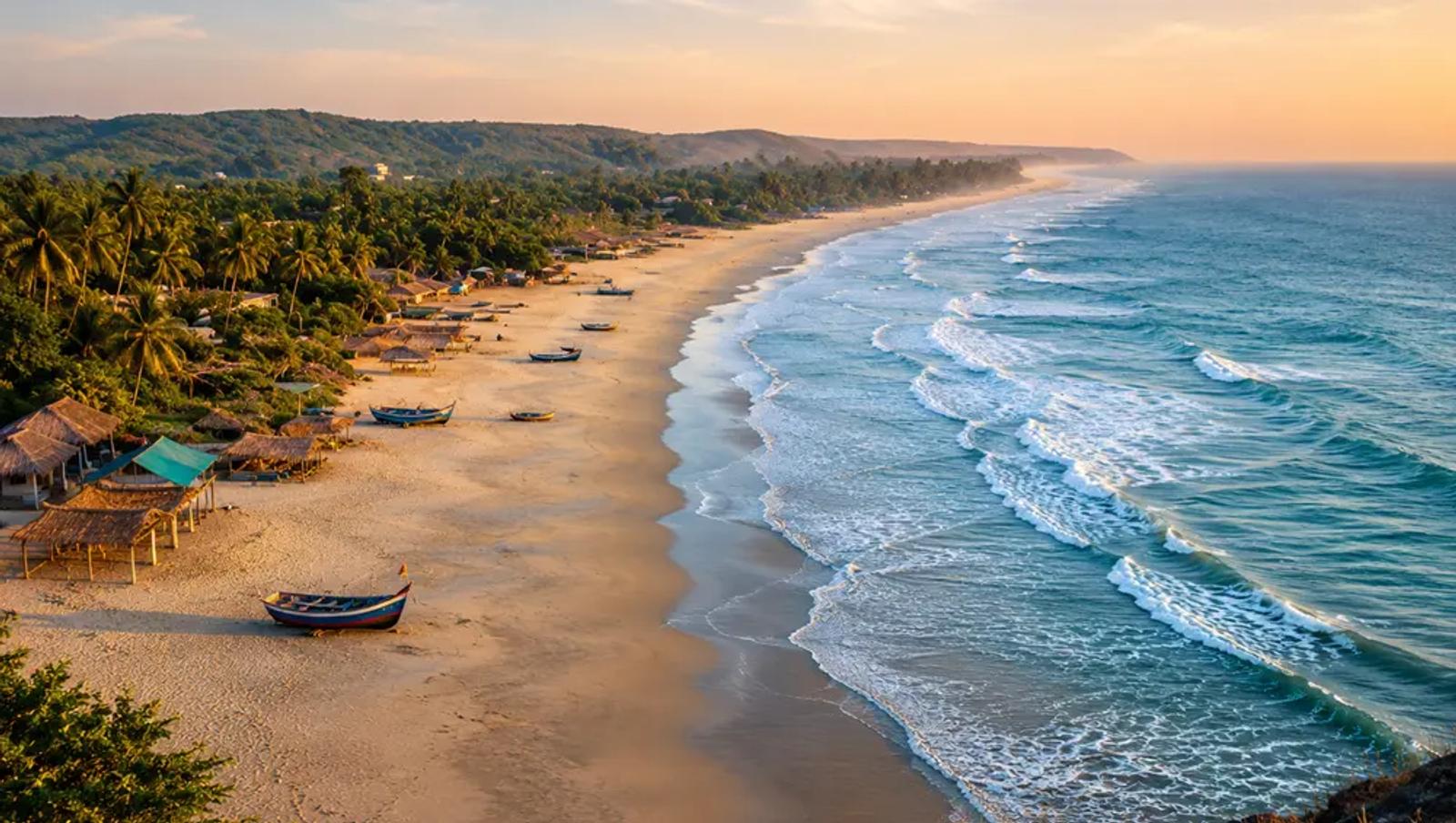
The light is low and grey-gold, coming in sideways off the Arabian Sea. The sand is wet from the tide, darker at the waterline, pale and dry further back where the palms begin. You can walk for twenty minutes in either direction and hear nothing except the surf and, occasionally, the sound of a single fisherman pushing his boat out.
This is not the Goa most people picture. That Goa - the beach clubs, the sunset parties, the restaurants that stay open until 3am - is real, and it is a few kilometres south. Mandrem is a different place with a different logic. Understanding what makes it different is useful if you are considering a yoga retreat in North Goa and trying to decide whether a retreat here would actually give you what you need.
Where Mandrem Sits
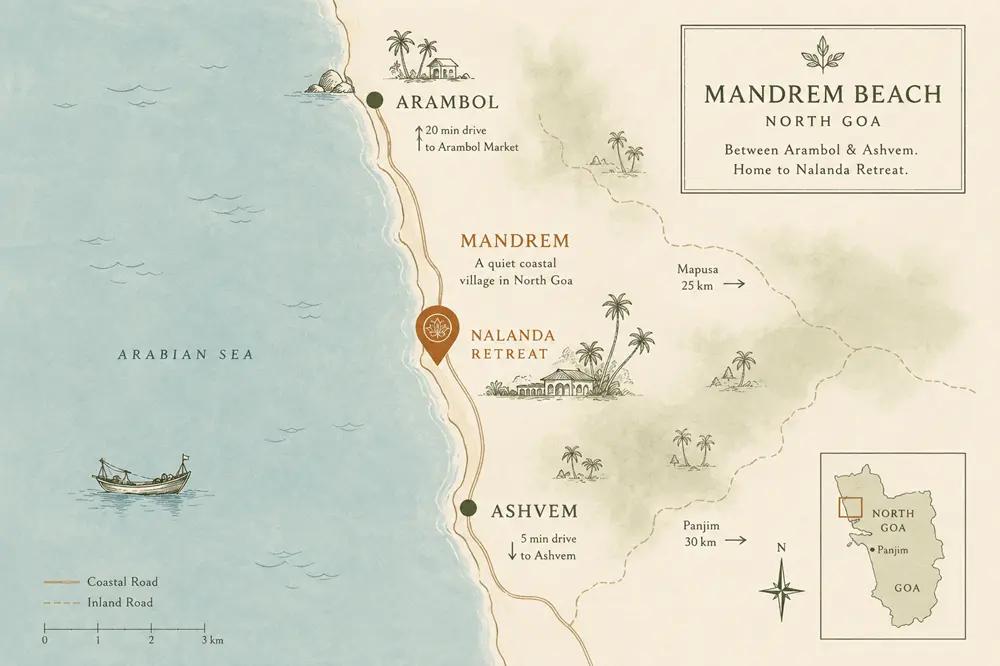
Mandrem is in North Goa, roughly 30 kilometres from Panaji and 50 kilometres from Dabolim airport (about 40 minutes from the newer Mopa airport). It sits between Arambol to the north and Ashvem to the south - geographically close to both but temperamentally distinct from either.
Arambol is the backpacker village: drum circles on the beach, long-term residents, an alternative scene that has been there since the 1970s. Ashvem has some boutique hotels that draw a more design-conscious crowd. Mandrem sits between these two poles with a quieter sense of itself. There are no clubs. There is no particular nightlife. The beach is too wide and too far from the road to get the spill-over from either neighbour.
This is not accidental geography. It is the reason that the wellness infrastructure in Mandrem developed as it did - and the reason Nalanda chose this location over other, more visible parts of Goa.
The Beach Itself
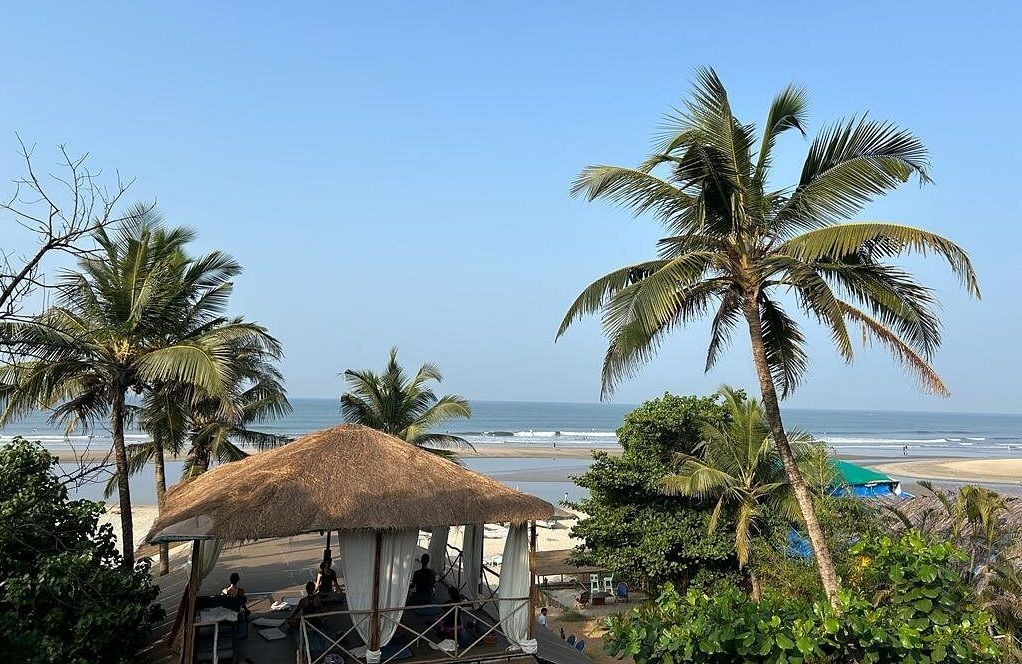
Mandrem Beach is a long arc of fine sand facing west. The sea here is the full width of the Arabian - on clear evenings, the horizon is unobstructed. Sunsets are direct and unfiltered by coastal development; the western-facing shore means the light changes dramatically in the last hour before dark.
In peak season, the beach is occupied but not crowded. In monsoon, it is almost empty. The surf changes through the year - swimmable and manageable from October to April, rough and unsafe from June to September. The water, when safe, is warm (around 28 degrees C in winter).
The beach road - a narrow strip that runs roughly parallel to the sand - has a cluster of small restaurants and guesthouses, mostly operated by local families. Nothing is particularly large or particularly branded. The scale of everything in Mandrem is human-sized, which is part of the point.
Why Location Matters for a Retreat
There is a practical argument for choosing a retreat based on its setting, not just its programme. The environment you are in does active work on your nervous system - or it does not.
A retreat held on a busy beach, near a party road, in a location where the visual and auditory input is high, asks more of its participants. You have to manage the external stimulation as well as doing the internal work the programme requires. This is manageable for experienced practitioners. For someone trying to genuinely decompress for the first time, it is a significant added cost.
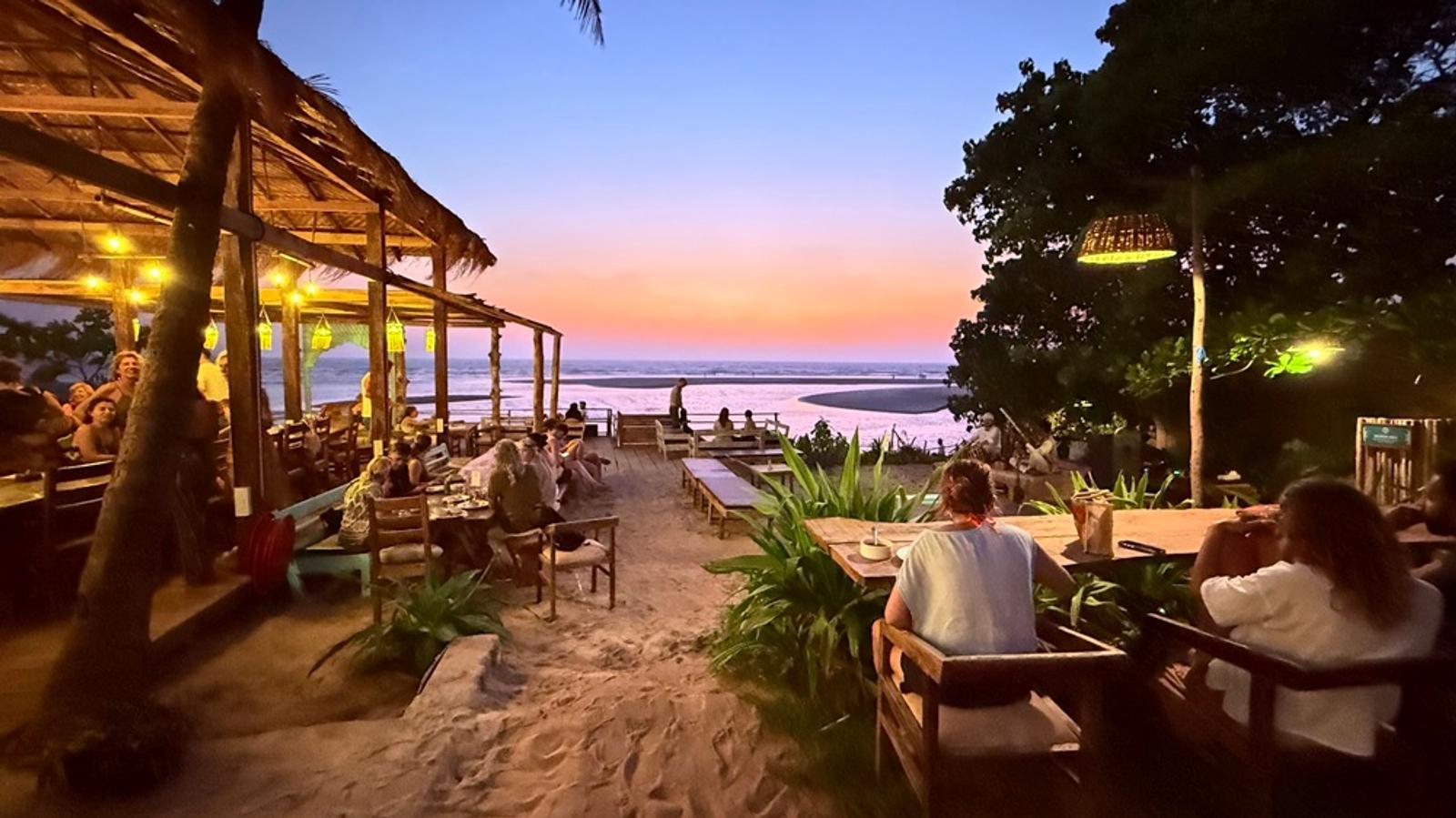
Mandrem's quiet is not forced or artificial. There are no policies requiring silence; there is simply not much noise to begin with. The environment around Nalanda Retreat supports stillness without requiring it, which is a more sustainable basis for a retreat experience.
The mornings in particular have a quality that guests consistently mention. That 6am beach, the specific light and the specific quiet - it is part of why starting the day differently here feels possible in a way that it does not at home.
What the Surrounding Area Offers
Mandrem is genuinely self-contained for a retreat stay. You do not need to leave the immediate area to have a full experience. But if you want to:
Eating beyond the retreat: Chia Lounge at Nalanda is the only plant-based dining option in Mandrem and, we believe, one of the best in North Goa. Outside our property, there are small beach shacks serving Goan fish curry and Kingfisher; a handful of cafes serving fresh juice and eggs in the morning.
Short trips: Arambol market (20 minutes north) is worthwhile for fabrics, silver, and a genuine flea market energy. Anjuna market (30-40 minutes south) runs on Wednesdays and is one of Goa's oldest. Chapora Fort is a 40-minute drive for coastal views. Old Goa's Portuguese-era churches are about an hour south.
What to do when not in session: Very little, which is the correct answer. Walk the beach. Sit on the porch. Sleep. Read. Eat well. This is the programme.
Mandrem and the Monsoon
The specific character of Mandrem changes in the monsoon months in ways that are worth knowing about if you are considering travelling between June and September.
The beach empties. The vegetation around the property becomes extraordinarily green - the palms and the garden reach a saturation that does not exist in any other season. The sound of rain on the roof of an open-air space is one of the more reliably restful sounds available in nature. The fishing boats come in and stay in, which means the early mornings are quieter even than usual.
For guests who choose Goa specifically in monsoon, Mandrem delivers more of what they came for than any busier part of the coast could. The logic is simple: if the point is to be somewhere quiet, go where it is actually quiet.
Nalanda's Position on Mandrem Beach
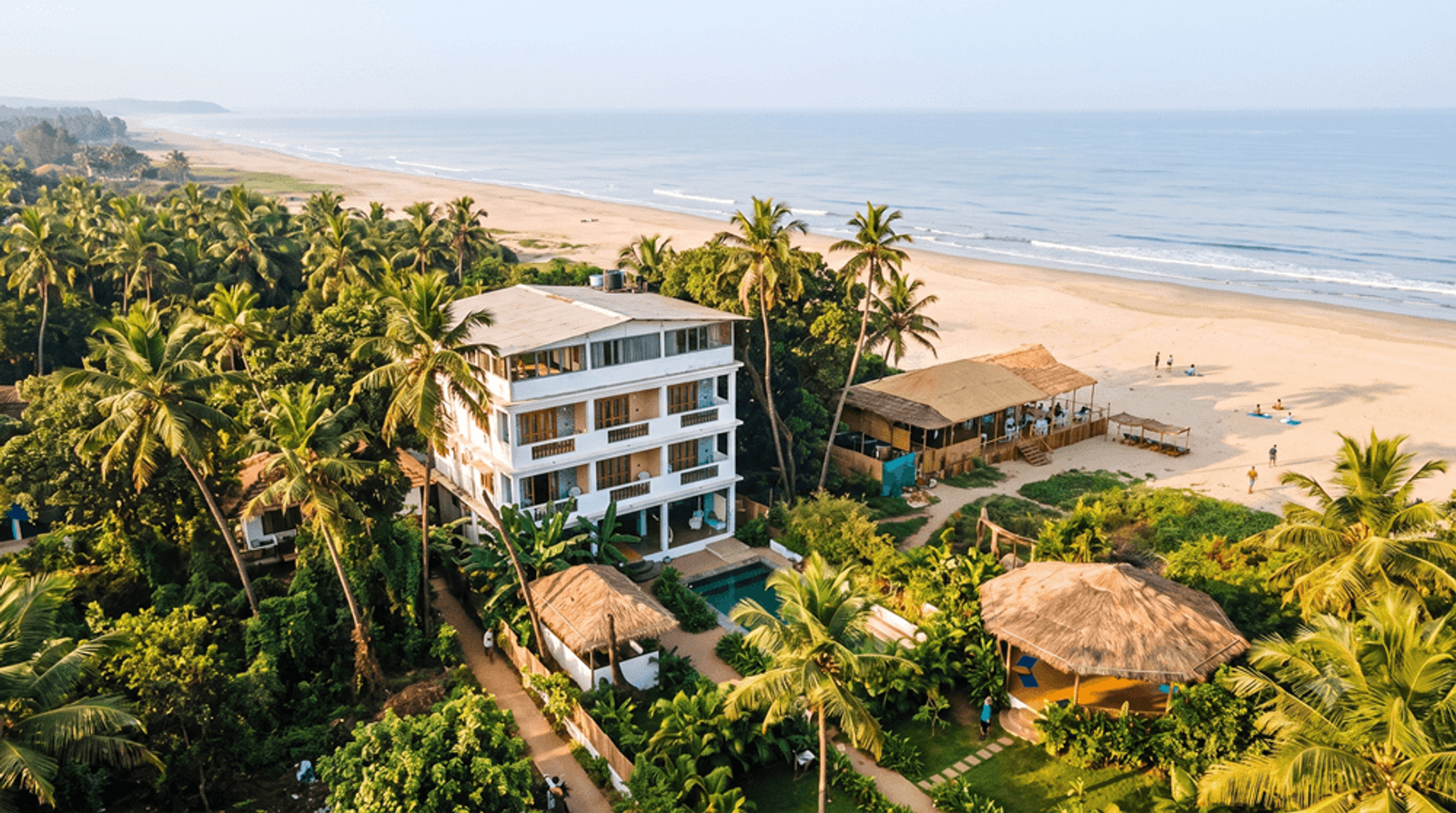
Nalanda Retreat sits directly on Mandrem Beach - beachfront access, not beachfront-adjacent. The garden faces the sea. The sounds from the beach, across the day and into the night, are the sounds of the ocean rather than of other people.
We have been here long enough to be part of the landscape in a way that matters. Over a thousand retreats hosted, guests from more than forty countries, teachers who live on the property rather than commuting in from elsewhere. The standard we hold for a wellness retreat is shaped by this rootedness - by knowing what the environment can do and building the programme around it.
Quick Answer: Where is Mandrem Beach?
North Goa, approximately 40 minutes from Mopa airport and 50 minutes from Dabolim. Between Arambol and Ashvem. A long, quiet stretch of sand with limited development and no significant nightlife. One of the calmest beaches in Goa year-round.
Our accommodation at Nalanda is on Mandrem Beach: https://nalandaretreat.com/stay. Our retreat programmes are built around this location: https://nalandaretreat.com/retreats
Frequently asked questions
Is Mandrem Beach busy?
No, by Goa standards. It is one of the quieter beaches in North Goa. In peak season it sees visitors but does not feel crowded. In monsoon it is almost empty.
How far is Mandrem from Panaji?
Approximately 35 kilometres by road, around 45-60 minutes depending on traffic. From Mopa airport: approximately 20-25 minutes. From Dabolim: approximately 50-60 minutes.
Is Mandrem safe for solo travellers?
Yes. The area is well-established for international travel, predominantly quiet, and has a small but consistent international visitor community. Standard travel precautions apply.
Are there restaurants in Mandrem?
Yes, though options are limited compared to busier beach towns. Nalanda's Chia Lounge offers plant-based dining. Local shacks serve Goan food. A 15-20 minute drive reaches more varied options in Ashvem and Morjim.
What is Mandrem Beach like in monsoon?
Green, quiet, and atmospheric. The sea is rough and unsuitable for swimming. The beach is largely empty. The surrounding vegetation is at its most lush. For retreat guests, it is often described as the most beautiful the beach looks all year.
How is Mandrem different from other North Goa beaches?
Quieter than Vagator, Morjim, or Anjuna. Less developed than Ashvem. Less alternative than Arambol. It occupies a particular middle ground - accessible, genuinely calm, with enough infrastructure for a comfortable stay but not enough to pull you out of the retreat headspace.