The word Panchakarma appears on a lot of spa menus. It sounds significant and slightly intimidating - an ancient Sanskrit term, five syllables, gesturing toward something old and serious. If you have looked up Panchakarma in Goa and come back more confused than before, this guide is for you.
Panchakarma is not a single treatment. It is not a product. It is not, despite how it is sometimes marketed, a luxury body wrap with an Ayurvedic name. It is a systematic approach to clearing accumulated toxins from the body using a sequence of therapies developed within Ayurvedic medicine over thousands of years. Understanding what it actually is - and what it genuinely requires of you - makes the difference between a superficial spa experience and something that has lasting effect. You can also explore our Panchakarma Programme in Goa to understand how the process is approached in a retreat setting.
The Meaning Behind the Name
Pancha means five. Karma means action or procedure. Panchakarma, then, is a set of five primary therapeutic actions designed to cleanse the body of ama - the Ayurvedic term for accumulated waste, toxins, and stagnant energy that builds up when the digestive system is overwhelmed and the body's natural elimination processes are suppressed.
In Western health terms, you might recognise this as the byproduct of chronic stress, poor sleep, a diet that prioritises convenience over nutrition, and a life lived mostly indoors. Ama builds up slowly. Its symptoms are familiar: brain fog, sluggish digestion, fatigue that sleep doesn't fix, a sense of heaviness that has nothing to do with your weight.
The five actions of classical Panchakarma are: therapeutic vomiting (vamana), purgation (virechana), medicated enema (basti), nasal cleansing (nasya), and bloodletting (raktamokshana). In contemporary retreat settings - including Nalanda - the emphasis shifts toward the most accessible and widely beneficial of these, particularly basti and virechana, supported by a sequence of preparatory therapies that begin before the cleansing phase.
What a Panchakarma Programme Actually Looks Like
The experience divides into three phases.
Purvakarma: preparation. This is often overlooked in shorter programmes, but it is arguably the most important phase. Before the body can release toxins efficiently, it needs to be softened and prepared. This involves internal oleation - taking medicated ghee in increasing quantities over several days - and external oleation through Abhyanga, a full-body oil massage performed with warm herbal oils by two therapists working in synchrony. Sweating therapies (Swedana) follow, using herbal steam to open channels and further loosen accumulated ama from the tissues.
This phase takes three to seven days, depending on the programme. It is not glamorous. The medicated ghee is not pleasant. Many guests find the early days of a Panchakarma programme surprising - they expected to feel immediately better and instead feel unusually tired. This is normal. The body is beginning to move.
Pradhanakarma: the cleansing phase. Once the body is adequately prepared, the primary therapies begin. At Nalanda, this typically centres on Virechana (therapeutic purgation using herbal formulations) and Basti (medicated enema using herbal decoctions and oils). These sound more alarming than they are. The process is supervised throughout by our Ayurvedic physician, who adjusts the formulations and timing based on your constitution and how your body is responding.
This is the phase where most guests report the most significant shifts - in digestion, in mental clarity, in the quality of their sleep. It is also the phase that requires the most of you. You will be asked to rest, to avoid stimulation, to eat a prescribed diet of simple, warm, easily digestible food. This is not a restriction; it is part of the therapy.
Paschatkarma: restoration. After the cleansing phase, the body needs support in rebuilding. This involves a gradual reintroduction of foods, specific rejuvenating treatments, and guidance on how to maintain what has been established once you return home. A Panchakarma without this phase is incomplete - it is like cleaning a room and leaving the door open.
What Panchakarma Is Not
It is not a one-day spa treatment. A genuine Panchakarma programme requires a minimum of five days; seven to fourteen days allows for meaningful depth. If you have seen 'Panchakarma facials' or 'Panchakarma massages' on a spa menu, those are borrowed terms, not the thing itself.
It is not a weight-loss programme, though some guests experience weight changes as a byproduct of improved digestion and reduced inflammation. It is not purely physical - many guests report significant emotional release during the process, which Ayurveda understands as the body releasing not just physical but psychological accumulation.
It is not a passive experience. You will be an active participant in your own cleansing. This is, for some people, the most unfamiliar part. Western spa culture positions the guest as the recipient of a treatment. Panchakarma asks you to show up with intention, follow a prescribed routine, and trust the process even when the first few days feel counterintuitive.
Panchakarma in Goa: Why Location Matters
The classical texts of Ayurveda recommend undergoing Panchakarma during seasonal transitions and monsoon, the period of Varsha Ritu, is considered one of the most auspicious times for cleansing. The body is already naturally inclined toward release during the rains. The atmosphere is cool. The digestive fire (agni), suppressed by the heat of summer, is ready to be rekindled.
Goa's monsoon climate - humid, green, relatively cool - mirrors the conditions described in classical texts as ideal for Panchakarma. This is not incidental. It is one of the reasons why the Nalanda experience in monsoon is particularly suited to a first-timer: the environment supports the process without requiring you to manage it consciously.
Our wellness experiences integrate Ayurvedic therapies within a setting designed for this kind of depth. Our in-house Ayurvedic physician conducts a full consultation on arrival - assessing your prakriti (constitution), your current imbalances, and the appropriate programme for your body. No two Panchakarma programmes at Nalanda are identical, because no two constitutions are.
What to Expect on Your First Day
You will have a consultation. You will describe your symptoms, your sleep, your digestion, your stress patterns. The physician will take your pulse - in Ayurveda, pulse diagnosis (Nadi Pariksha) is a sophisticated tool that reveals not just your current state but your constitutional tendencies. Based on this, your programme will be personalised.
You will be given your first dietary prescription. For most first-timers, this begins with warm, simple food - kitchari (a spiced rice and lentil dish), herbal teas, warm water. Nothing cold. Nothing raw.
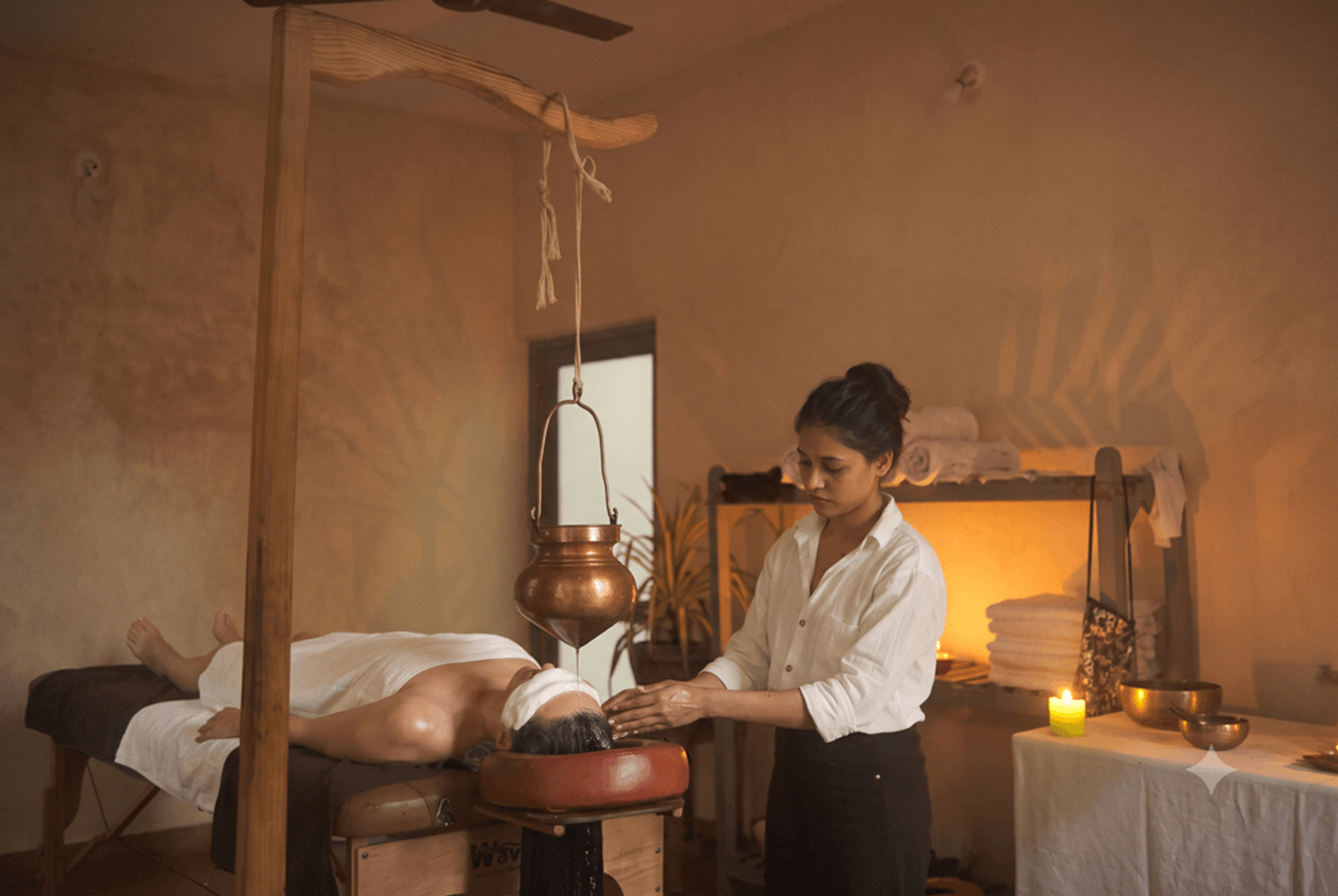
Your first treatment may be Abhyanga. If so: four hands, warm oil, and silence. Most guests fall asleep.
By the end of the first day, the pace will have already shifted. This is the point. The deceleration is part of the medicine.
If you want to understand more about what Ayurveda uses as its diagnostic framework - including the three doshas that form the basis of constitutional assessment - our guide to what doshas actually are is a useful starting point before you arrive.
Quick Answer: What is Panchakarma?
A classical Ayurvedic cleansing protocol consisting of preparatory therapies followed by targeted elimination treatments. It takes a minimum of five to seven days, is supervised by an Ayurvedic physician, and is designed to clear accumulated toxins while restoring the body's natural balance. It is not a single massage or spa treatment.
View our Ayurvedic wellness programmes at https://nalandaretreat.com/programs.To discuss whether Panchakarma is right for you: reservations@nalandaretreat.com
Frequently asked questions
How long does a Panchakarma programme take?
A minimum of five days for a meaningful experience; seven to fourteen days for genuine depth. The preparation phase (Purvakarma) alone typically takes three to five days, and the restoration phase requires two to three days minimum after the cleansing treatments.
Is Panchakarma safe?
When supervised by a trained Ayurvedic physician, yes. At Nalanda, all programmes are preceded by a full medical consultation and ongoing monitoring. Panchakarma is not appropriate for people who are pregnant, very elderly, or in acute illness - your physician will assess this at consultation.
What should I eat during Panchakarma?
You will be given a specific dietary protocol. In general: warm, cooked, simply spiced foods. Kitchari is common. Cold foods, raw vegetables, alcohol, and caffeine are avoided throughout the programme. This is part of the therapy, not a restriction imposed on top of it.
Can I exercise during Panchakarma?
Light movement - gentle yoga, slow walking - is appropriate. Vigorous exercise is counterproductive during the cleansing phase. Your body needs its energy directed inward during this time.
What does Panchakarma feel like?
Deeply restful, occasionally uncomfortable, and frequently surprising. Many guests feel tired in the first two to three days. From day four onward, most report increased clarity, lighter digestion, and improved sleep. Emotional release during Panchakarma is not uncommon and should be understood as part of the process.
How is Panchakarma in Goa different from Panchakarma elsewhere in India?
Goa's monsoon climate aligns with the classical recommendations for Panchakarma timing. Nalanda's approach is rooted in classical Ayurveda rather than commercialised spa protocols - the difference shows in the depth of the initial consultation, the quality of the herbal preparations, and the continuity of care throughout the programme.