Quick Answer
The 50-Hour Asana Expertise: Vinyasa Adjustments and Assists Teacher Training at Nalanda Retreat is a 6-night residential CPD programme for certified yoga teachers. It covers hands-on adjustment technique in vinyasa postures, verbal cueing, biomechanics of adjustment, trauma-informed practice, and contraindications. Delivered by the Nalanda teaching team. Price on enquiry.
Hands-on adjustment is the most skill-intensive part of yoga teaching, and the least developed in most 200-hour programmes. A few weekend modules on alignment theory, a couple of practicum hours on classmates. Then a real class, real students, real-time decisions about whether and how to touch them.
A dedicated adjustment and assists training addresses this gap directly. It is not a review of what you learned in your 200-hour foundation training. It is a focused, practicum-heavy programme that treats adjustment as its own discipline.
What the programme covers
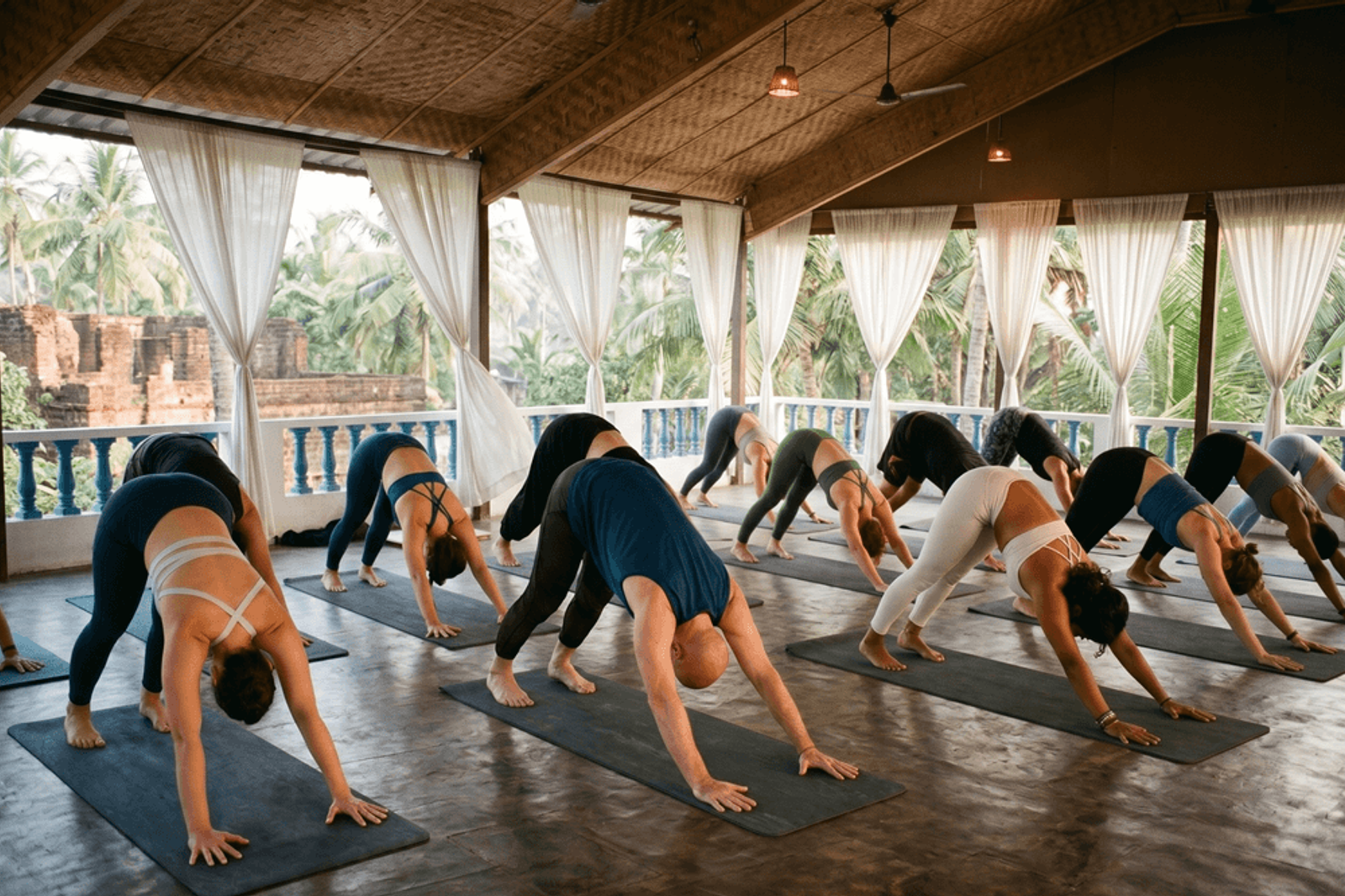
The 50-Hour Asana Expertise module at Nalanda is built around vinyasa adjustments - the specific hands-on technique applied within a flowing, dynamic practice context. This is different from adjustment in a static Iyengar-style context: the timing, the positioning, and the quality of touch all change when a student is moving through a vinyasa sequence.
Hands-on adjustment methodology
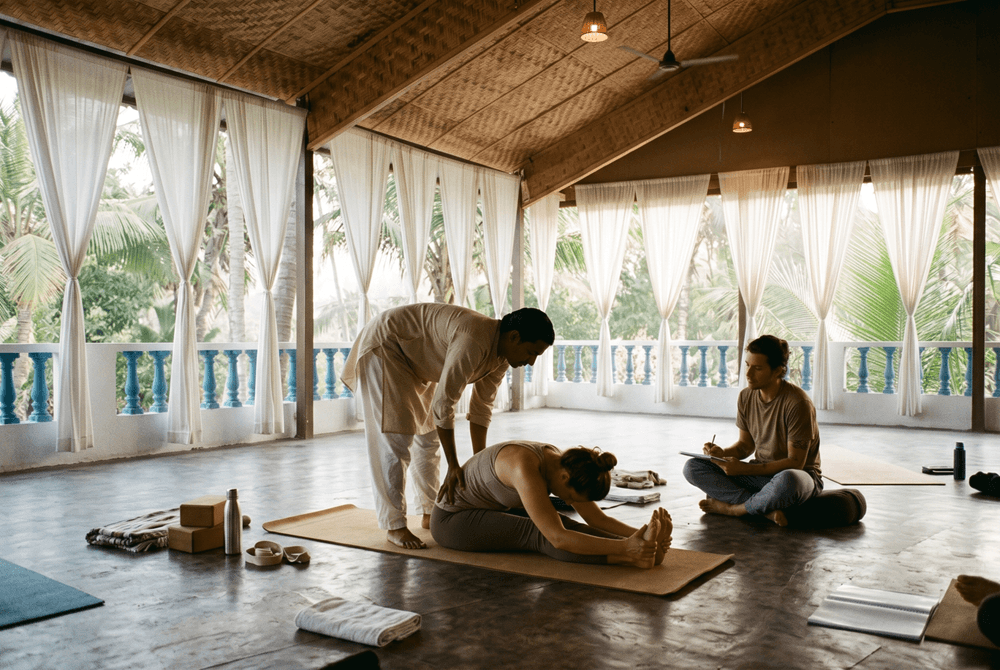
The core of the programme is technique: how to approach a student, how to read their posture before you touch them, where to place your hands, how much pressure to apply, and how to give an adjustment that enhances the student's own understanding of the posture rather than just moving them into your idea of correct alignment.
This covers the full range of vinyasa postures: standing sequence, warrior variations, downward dog, forward folds, backbends, twists, and inversions. Hands-on time is the majority of the programme rather than lecture-based learning.
Biomechanics and alignment principles
Effective adjustment starts with understanding what you are trying to achieve in a posture: which muscle groups are working, where the load is going, and what an aligned version of the posture actually looks like in a body with typical ranges and proportions. The biomechanics component builds a clear model for this, one that holds across different body types rather than assuming a single ideal shape.
Verbal cueing and non-touch alternatives
Not every situation calls for hands-on contact. This module covers verbal cueing technique, prop-based alternatives to touch, and the decision-making process of when hands-on adjustment is the right tool and when it isn't. In a contemporary teaching context, the ability to give precise verbal instructions that replace touch is as important as the physical adjustment skill.
Trauma-informed practice
Hands-on adjustment has become more complex in the post-#metoo teaching environment, and appropriately so. The trauma-informed component of the programme covers the ethical and practical framework for asking consent, reading student signals, and adjusting your approach based on what the student actually needs rather than what you want to give.
This is not a peripheral ethics module. It is integrated throughout the hands-on practicum because the decisions you make in real time, before you place your hands, are the most important ones.
Contraindications and special populations
Pregnancy, recent injury, hypermobility, chronic pain, age-related range of motion changes. The contraindications module covers when adjustments should be modified, avoided, or replaced with verbal cueing, and how to read intake forms and pre-class conversations to identify relevant factors. This knowledge is directly applicable across all programmes at the Nalanda retreat campus.
Programme structure: 6 nights at Mandrem Beach
The module runs over 6 nights at Nalanda Retreat. This residential structure is intentional: adjustment skill is not developed in a single workshop day. You need repeated practice across multiple sessions, different partners, and enough time to internalise the feedback you receive.
The 6-night format gives you that density. By the end of the module, you have adjusted the same postures on multiple different bodies, received feedback from the teaching team, and had time to recalibrate between sessions.
The CPD certification
The 50-Hour Asana Expertise programme awards 50 CPD (Continuing Professional Development) hours, which count toward Yoga Alliance RYT 200 or RYT 500 upgrade requirements. This is the same CPD framework used by the 50-Hour Ashtanga Advanced TT, the 65-Hour AromaYin TT, and the 50-Hour Yoga Nidra and Breathwork TT at Nalanda.
For UK-based teachers, CPD hours are also relevant for insurance and professional membership bodies that require documented ongoing training. A 50-hour specialist module in hands-on adjustment and assists is a substantial CPD qualification in its own right.
Who this training is for
The Vinyasa Adjustments and Assists module is designed for:
- Certified yoga teachers (200-hour or above) who want to develop their hands-on skill beyond what their foundation training covered
- Teachers who have received feedback that their adjustments need refinement, or who feel uncertain about hands-on contact
- Teachers working toward E-RYT 500 designation who need specialist CPD hours
- Teachers returning to teaching after a break and wanting a structured refresher on adjustment technique
- Teachers who teach in a studio context with regular hands-on contact and want a higher standard of precision and safety
This is not a beginners' yoga programme. You need an existing 200-hour certification to enrol, and you need an existing physical practice to work from during the practicum. If you are considering foundational training first, the 200-hour Yoga Teacher Training in Goa runs in January 2027.
Combining the adjustments module with other Nalanda TTCs
Nalanda runs several specialist 50-hour CPD modules alongside the 200-hour foundation programme. Some teachers attend multiple modules across the same season or across successive years, building a specialist portfolio of CPD qualifications. See the full teacher training programme list at Nalanda.
The Vinyasa Adjustments module pairs naturally with the 50-Hour Ashtanga TT (which focuses on Ashtanga Primary Series technique and its own adjustment methodology) and with the 50-Hour Yoga Nidra and Breathwork TT (which adds a non-physical practice discipline to a predominantly asana-focused teaching portfolio).
Frequently asked questions
What does the Vinyasa Adjustments and Assists Teacher Training cover?
The 50-hour module covers hands-on adjustment technique in vinyasa postures, biomechanics and alignment principles, verbal cueing, trauma-informed practice, consent frameworks, and contraindications for special populations. It includes significant practicum time across the 6-night residential programme.
Do I need an existing yoga teacher training certificate to apply?
Yes. The programme is a CPD module designed for certified yoga teachers with an existing 200-hour qualification. It is not a foundation teacher training programme.
How many CPD hours does the programme award?
The programme awards 50 CPD (Continuing Professional Development) hours, recognised by Yoga Alliance. These count toward RYT upgrade requirements (toward E-RYT 200, E-RYT 500, or YACEP designations depending on your current registration status).
Is the Vinyasa Adjustments TT residential?
Yes. The programme runs as a 6-night residential module at Nalanda Retreat, Mandrem Beach, North Goa. The residential format is part of the programme design: the adjustment skill requires repeated practicum across multiple sessions, which the 6-night structure provides.
How do I find out about current dates and pricing?
The programme is listed as price on enquiry. Contact Nalanda directly at hello@nalandaretreat.com for current intake dates and fees. The teacher training page at nalandaretreat.com/teacher-training lists all current TTC programmes.
Can I combine this module with other Nalanda teacher training programmes?
Yes. Several Nalanda CPD modules run across the season and can be combined. Teachers who want to build a specialist portfolio often take the Vinyasa Adjustments module alongside the 50-Hour Ashtanga TT or the 50-Hour Yoga Nidra and Breathwork TT across the same season or successive years.